theordinarycook

The Ordinary Cook loves to cook. If I am not cooking or baking then the chances are I am thinking about cooking and baking. I love sharing recipes and ideas and my website is my space to do this.

Shortbread fruit slice

shortbread fruit slice 2

This is another fruity variation on a traditional treat. I didn’t plan this succession of posts in this way. We have a friend who makes the most delicious fruit slice. We have asked her for the recipe but she does that quick change of subject thing that suggests that it is a closely guarded family secret. So, each time she cooks us a batch I try my best to work out how she does it. I haven’t cracked it yet. Both my girls love Mrs C’s fruit slice and devour it as soon as it arrives. So, the experiments will have to continue until I crack it.

I think Mrs C’s is a pastry rather than a shortbread but it’s a pastry quite like no other. I tried my own version with a quick flaky pastry but it wasn’t the same. In fact it was nowhere near. Then I tried this, just in case. I knew it wouldn’t be the same as Mrs C’s but it is pretty good. So, if you don’t have the benchmark of Mrs C’s fruit slice to stand up to you could be very satisfied with these. They take the shortbread just one step further in the decadence stakes. They travel well so make good picnic or fete treats and with the summer holidays just around the corner we are hoping that there will be plenty of opportunities for picnics, and in the open air, rather than in the car.

For the shortbread base and topping
425 g (15 0z) plain flour
150g (5oz) caster sugar
275g (10oz) butter

For the fruit filling
150g (5oz) mixed dried fruit (raisins, currants, glace cherries, mixed peel etc)
25g (1oz) soft light brown sugar
juice of 1 orange

Method

Preheat the oven to 160°c, gas mark 3, or place a rack on the bottom rung of the baking oven of the Aga. Grease a 26cm square tin.

To make the fruit filling, pour the orange juice into a small saucepan and add the sugar and fruit. Bring to a very gentle simmer and cook for 5 minutes, until the fruit has plumped up. Take off the heat and allow to cool.

To make the shortbread, place the flour, sugar and cubed butter into a food processor and pulse until it begins to come together. If you don’t have a food processor then place the flour in a large bowl, stir in the sugar and using your fingertips rub in the cubed butter, until it begins to make pea sized pieces.

Spread half of the shortbread mixture in the bottom of the tin and press down well with the back of a spoon. Spread the fruit evenly over and cover with the remaining shortbread dough. Press down well with the spoon. Prick all over with a fork. Place in the centre of the oven and cook for 25-30 minutes until lightly golden. Sprinkle with caster sugar and cut into squares. Leave to cool completely in the tin.

Shortbread fruit slice Read More »

Plum and almond flapjack

plum and almond flapjack

This is a lovely way to use up those plums that you bought in the hope that they would be chin drippingly delicious but turn out to be tooth breakingly hard. It’s a sweet treat so you probably shouldn’t eat it all in one sitting…

100g (4oz) butter
100g (4oz) demerara sugar
1 generous tablespoon of golden syrup
150g (6oz) rolled oats
50g (2oz) flaked almonds
3-4 plums, stoned and sliced

Lightly grease a round pie dish or cake tin, mine measures 23cm but you could use one that measures 20cm and have a deeper flapjack.

Melt the butter, sugar and syrup in a medium-sized pan over a medium heat. Take off the heat and add the oats and the flaked almonds. Stir well to combine. Spread three-quarters of the mixture in the bottom of the pie dish. Lay the plums over this in a single layer. Spoon the remaining oat mixture over, leaving some of the plums exposed. Press the mixture down well with the back of a spoon.

Place in a preheated oven at 180°c, gas mark 4 or the centre of the baking oven of the Aga for 20-25 minutes until golden. Mark it into sections as soon as you take it out of the oven otherwise it is difficult to slice when cold. Leave to go completely cold before removing it from the dish.

Plum and almond flapjack Read More »

Bara Brith – the cake and the loaf

The cake version
The cake version


The loaf version
The loaf version

I have become a little obsessed with bara brith. A long time ago someone used to make our family a bara brith on a regular basis. It was delicious. It became a little less delicious when we heard that she mixed it in her bath.

There are two types of bara brith. The cake version and the yeasted bread version. Bara Brith translates from the welsh as speckled bread, referring to the currants, raisins and candied peel within each slice. The arguments about which is  the real bara brith rage on. History has it that bara brith would have been the last loaf put in the dying oven at the end of the weekly bake, adding the fruit to the bread dough to make it a more palatable loaf.  When raising agents came into regular use the bread became a cake.

The cake version is often a tea bread with the fruit steeped in strong cold tea overnight. This makes it a very moist cake that lasts for days. Spread with butter, it goes very well with a flask of coffee and a beautiful view.

The bread version, though, I have been having trouble with.  I initially tried a version from a traditionally welsh cookery book. This particular recipe asks for wholemeal flour. However, I found that the enriched dough became just to heavy to get anything more than a small rise, making for a heavy bread. It tasted OK, but the cake tasted better. However, I was determined to keep trying.  I found another recipe, and this one uses plain white flour. The rise was much more successful, but perhaps not authentic, traditional bara brith.  If anyone makes a bara brith bread (the yeasted version) that they enjoy then I would be very interested in their recipe.

At the moment I think my heart belongs to the cake version. It lasts for days making it a handy cake to have in the tin.  The bread is just a little too heavy, even when made with the white flour and if I want a fruit loaf then this one wins hands down.

I would be interested in your bara brith thoughts to keep the obsession alive.

Bara Brith – the cake and the loaf Read More »

Feeding a family of four for £3

Back in April I set a challenge for feeding a family of four for £3. Food poverty is becoming an increasing issue in the UK and food banks are experiencing an increasing demand. Food banks are not the entire solution, but they are an important way of making sure those in most need receive basic provisions when they need them most.

Fellow bloggers joined in and posted about the need to raise awareness of food poverty. My friend Rachel took part in the £1 a day Live Below the Line Challenge. The hardest thing for her was the lack  of fruit in her diet. Please do go and read her post about how she got on and how it has changed her perspective on consumption.

Another Rachel picked up the baton and posted about gnocchi with tomato sauce. A delicious dish made with ingredients that are cheap to source. If you aren’t already an avid reader of Rachel’s posts then I recommend that you scoot over there immediately and you will find yourself becoming a fan of her beautiful and thoughtful writing.

Nancy was my inspiration for this challenge and she too should be on your blog roll for her wonderful recipes and insights. She has posted many recipes that could be made for less than $4.

After I had started this challenge I watched Jack Monroe on BBC Breakfast and if you do nothing else today I want you to go straight over to her site and hear her views on food poverty. Jack has been living with it.

Choclette suggested dal as a delicious way to eat cheaply and inspired me to make one. Chip Butties and Noodle Soup also pointed me in the direction of her tomato and coconut lentil dal curry. Thanks to Choclette I also came across the Credit Crunch Munch blog challenge hosted by FabFood4All and Fuss Free Flavours. There are lots of recipes there for cheap and nutritious meals.

If you have any recipes that you want to share here please do let me know in the comments. If you have a food bank locally perhaps you could make a donation or volunteer your time this week.


Feeding a family of four for £3 Read More »

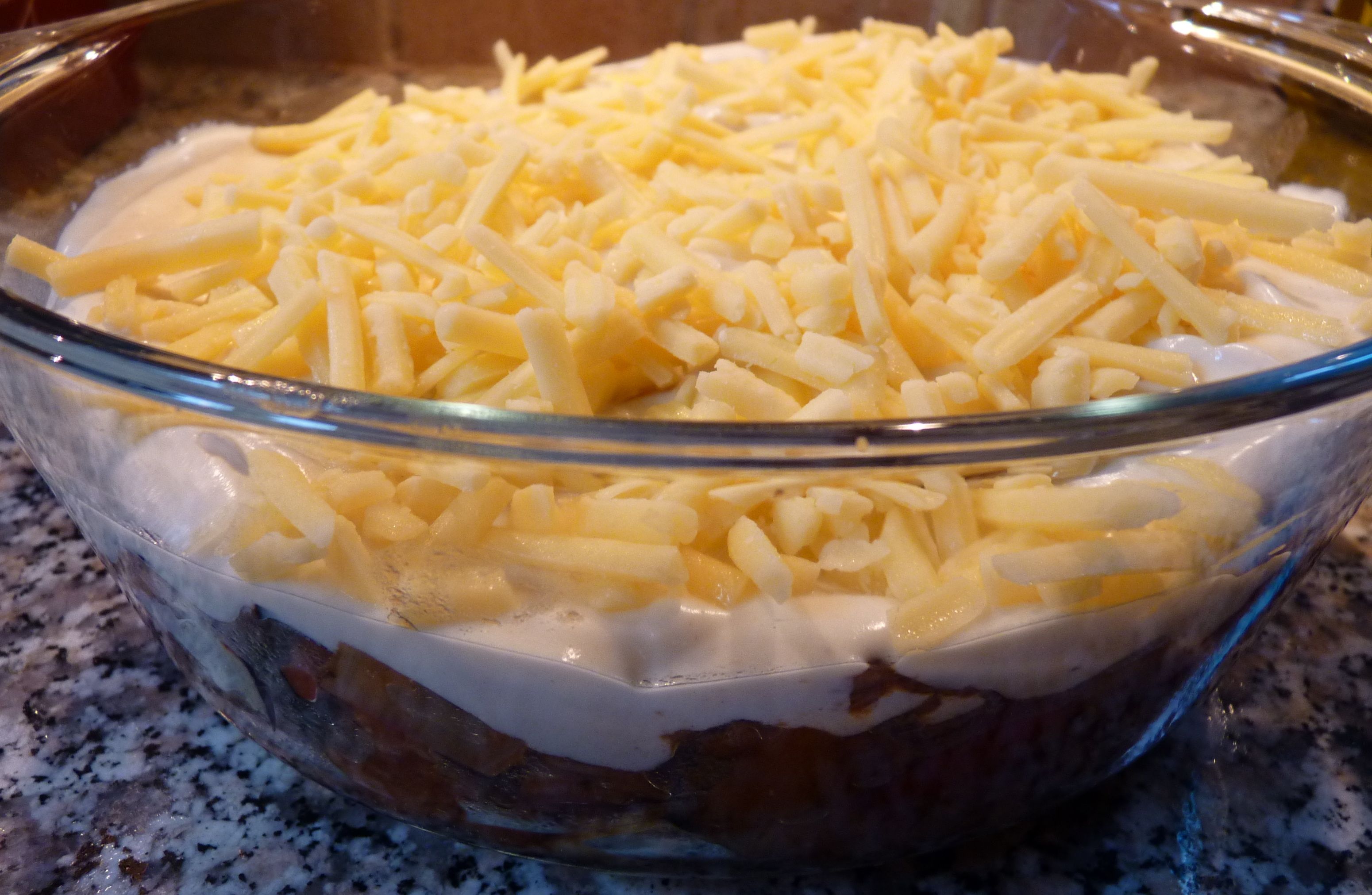
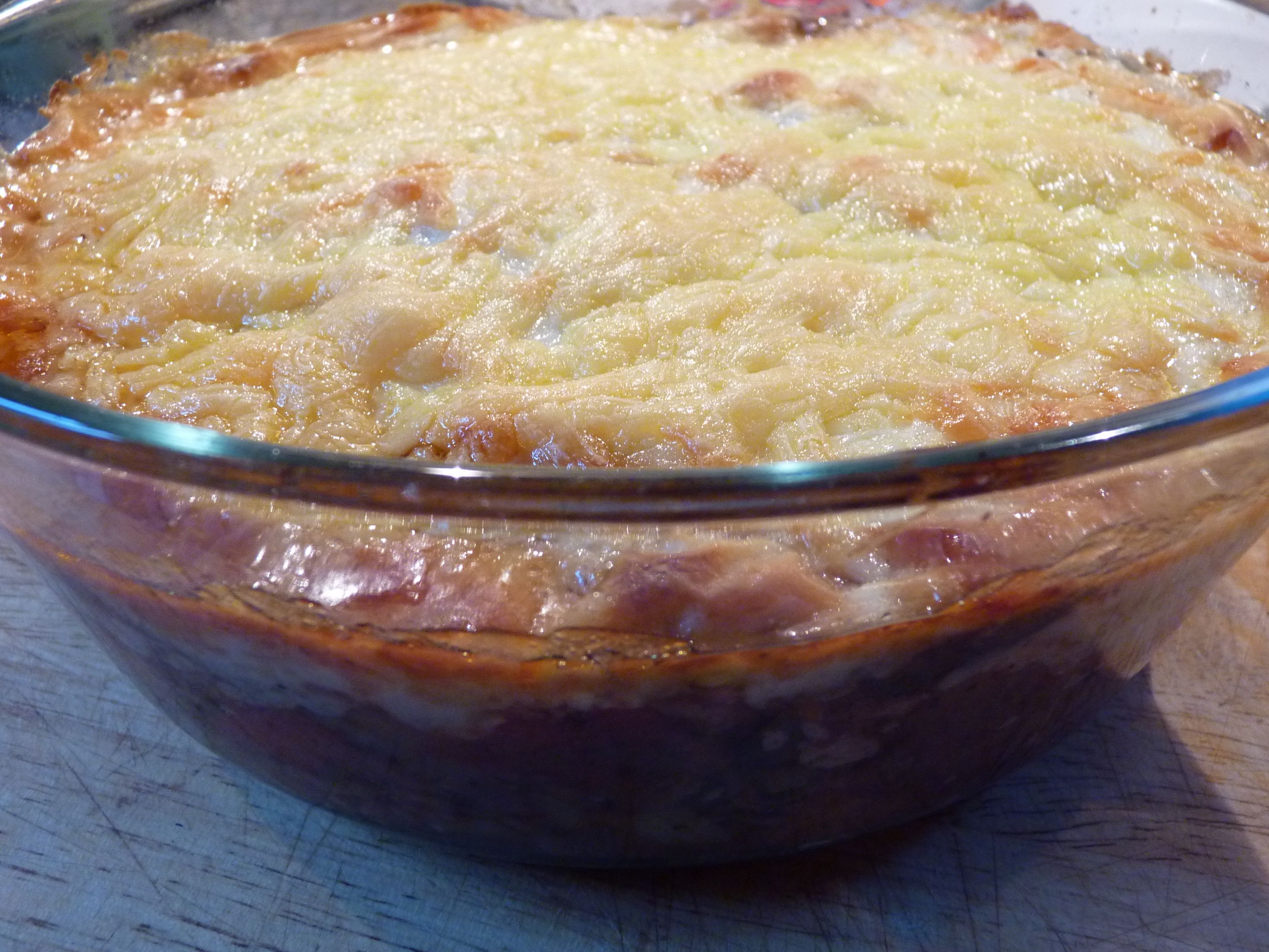
Quark moussaka

quark moussaka uncooked


quark moussaka cooked

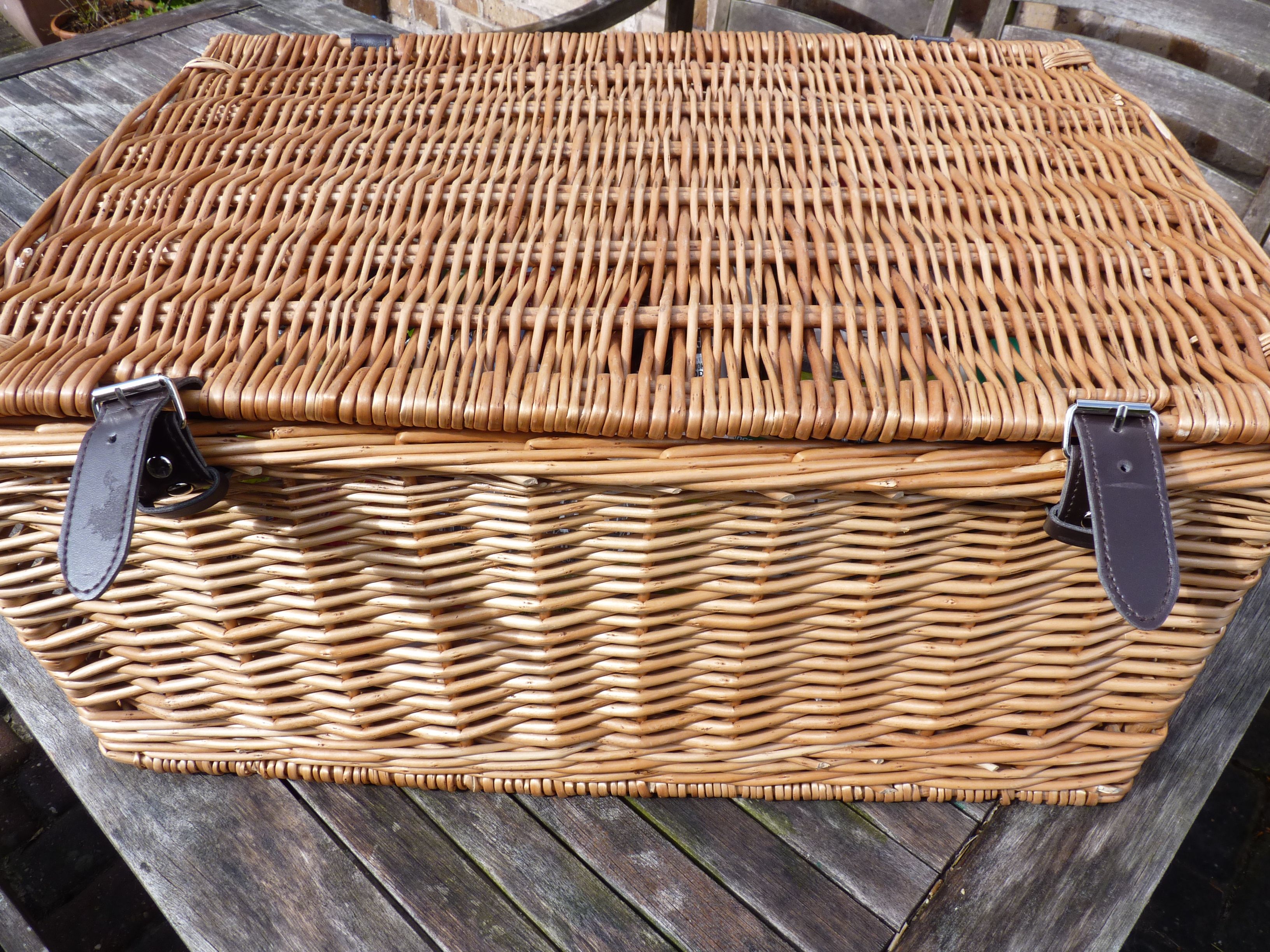
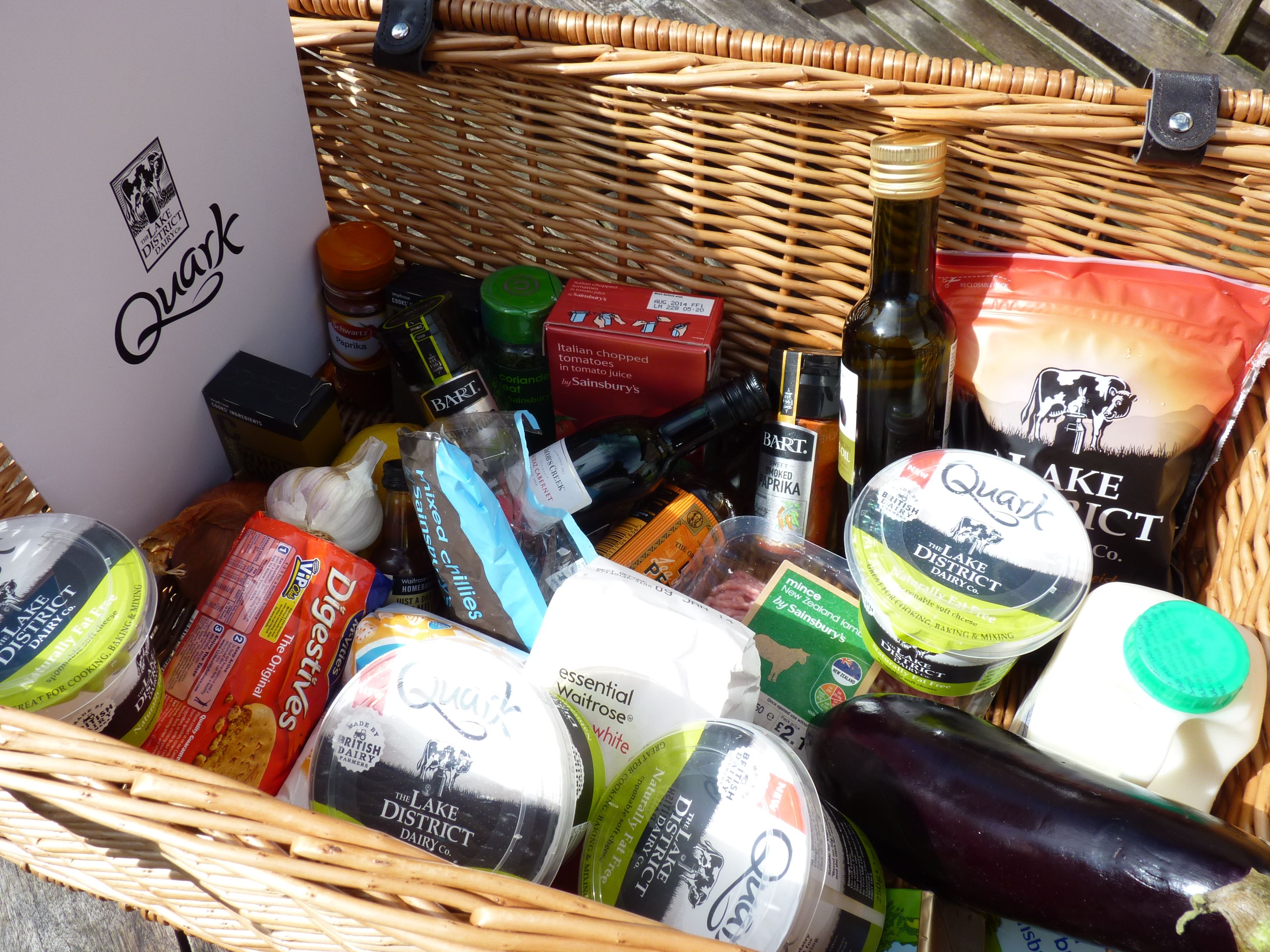
Shortly after I posted about the coffee cake I made for a friend I received an email from The Lake District Dairy Co. about whether I would like a hamper with their new quark to try. The hamper duly arrived with several samples of Quark and a lot more besides.

Quark hamper


inside quark hamper

The hamper also came with plenty of recipes to try, many of which have been created for The Lake District Co. by The Fabulous Baker Boys. The hamper contained all of the ingredients needed for the moussaka recipe, but I couldn’t resist adding a few of my own additions and changes to the recipe provided by the Baker Boys.

1 aubergine, sliced into rings or into lengths
200g lamb mince
1 onion diced
2 carrots diced
2 celery sticks diced
2 cloves garlic, finely chopped
1 red or green chilli, chopped finely
1 tsp of cumin seed
1 tsp dried coriander leaf
½ tsp smoked paprika
100ml red wine
400g tin of chopped tomatoes
1 tbsp worcester sauce or mushroom ketchup
salt and pepper
Olive oil

For the white sauce:
30g butter
25g plain flour
200ml milk
200g The Lake District Co. Quark
salt and pepper

5og grated cheddar

Method
Lightly coat the aubergine with olive oil and place into a roasting tray in a single layer. Cook in a preheated oven at 200°c for about 15 minutes until golden. You can also sear them on a griddle pan. Leave to one side.

Fry the onion, carrot, celery, chilli and garlic in 2 tbsp of olive oil in a pan until the onion is translucent. Remove to a plate. Add the mince to the pan and fry until well browned. Add the vegetables back to the pan. Add the cumin seed, coriander leaf and paprika and stir for a moment or two. Add the red wine and bubble until it is reduced. Add the tomatoes, worcester sauce/mushroom ketchup and salt and pepper and reduce the heat to a gentle simmer. Simmer for 20-30 minutes until the tomato sauce is thick.

Make the white sauce by melting the butter in a small pan. Add the flour and stir well. Cook for two minutes over a medium heat, stirring all the time. Add the milk gradually, stirring all the time. Each time the sauce thickens up add a little more of the milk. You should have a smooth sauce when all the milk has been added. Add the quark and season to taste.

In a heatproof deep dish, layer half the mince then cover with a layer of aubergine and then a layer of white sauce. Repeat the layers. Cover with the grated cheese and cook in a preheated oven at 200°c for 20-25 minutes until the cheese has turned golden and crispy. I enjoyed mine with salad and bread.


Quark moussaka Read More »

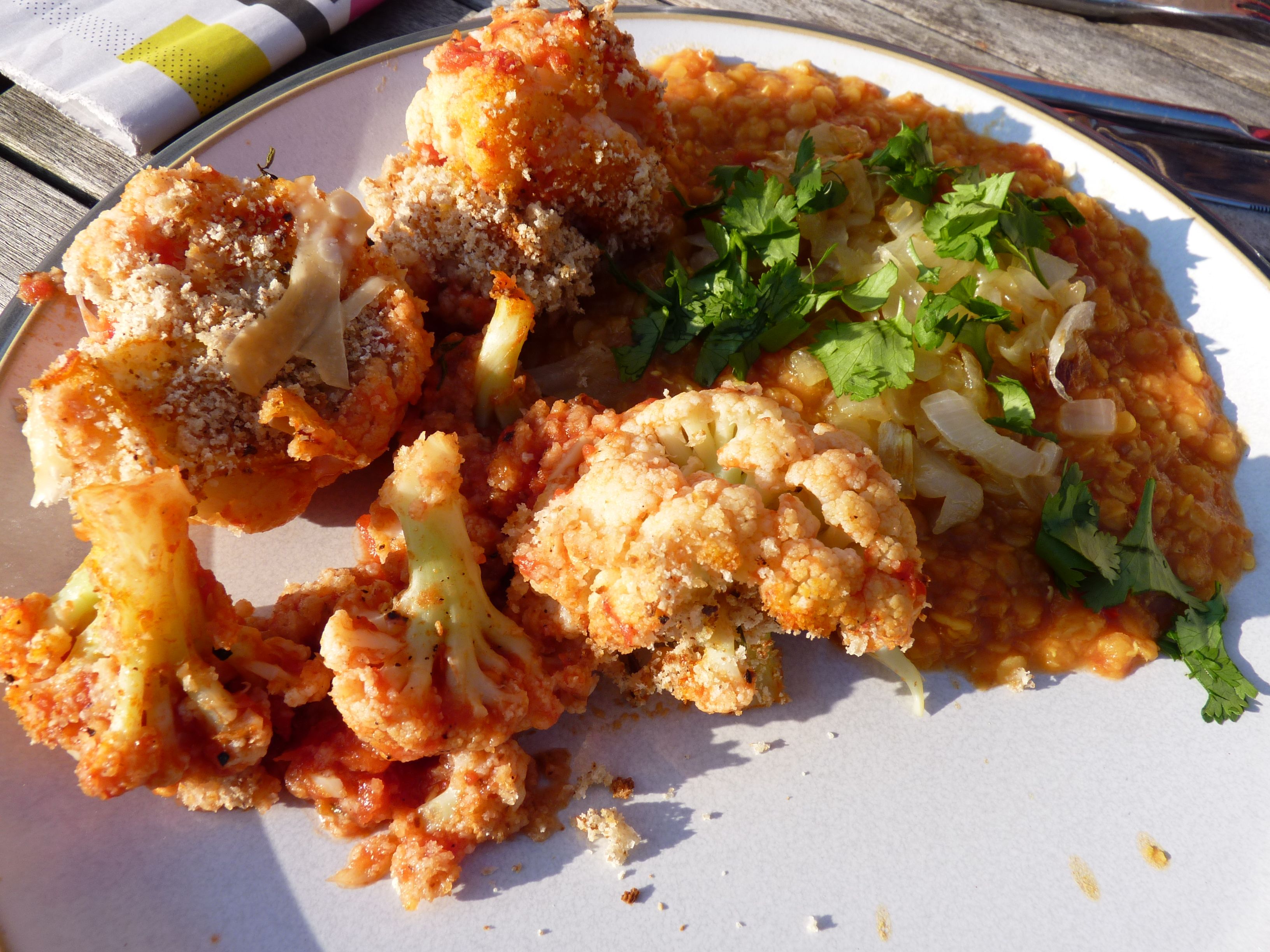
Dal with crumbed cauliflower

Dal with crumbed cauliflower

This post is part of my Feed a Family of Four for £3 challenge.

I was inspired to make this meal by a comment to my last post by Choclette of The Chocolate Log Blog. She reminded me that dal, served with brown rice makes for a nutritious and healthy meal.

For some reason I haven’t made dal for years. In my student days I practically lived off it. I would make a massive pot of it at the weekend and it would last me until Thursday.

I made this for us last week and then Chip Butties and Noodle Soup left a comment on my last post linking to her dal recipe, so it seems that dal is definitely the way to go.

I had bought a cauliflower with the intention of making cauliflower cheese. However, I thought that combining them with the rest of the tomatoes and some chilli would make a good accompaniment to the creamy dal.

The dal does contain turmeric and coriander, which might be costly to buy at first but  if you plan to make this a regular feature at the table then the cost per serving is small. Large Tesco stores ( and perhaps other supermarkets) sell spices at a more reasonable rate if you seek out the aisle  specialising in Asian foods. For example 300g of coriander seeds or 400g of ground coriander both come in at 99p.  400g of turmeric costs £1.99 or 99p for 100g. Independent Asian convenience stores also sell spices at low prices.  I have coriander growing in a pot so I used some of that to flavour mine, but ground coriander would have done the job equally well.

Chana dal costs £1.29 for 500g or £2.99 for 2kg. The tin of tomatoes costs 31p for 400g and I used half for the dal and half for the cauliflower. The cauliflower was from the value range at 69p. The chilli was from a pack of 4 for 60p. The breadcrumbs were from my freezer. If I have any stale bread left over, I whizz it up and put it in a food bag in the freezer. It was roughly the equivalent of a thick  slice from a bloomer so no more than 10p. The onion costs 14p as part of a pack of value onions. I did serve it with parmesan and fresh coriander, both of which I had in the house but are not integral to the flavour of the dish. All together this meal comes in at about £2.40 and served four people. We had some bread to mop up the juices which adds a bit more to the meal but keeps it under the £3.00 budget. It was a meal that we all enjoyed and will be repeated.

You can soak the lentils ahead of time to reduce the cooking time and therefore reduce the fuel needed to cook the dal.

For the dal
250g of split lentils or chana dal
1 litre of water
1 tsp turmeric
200g chopped tomatoes (tinned)
salt and pepper
1 tsp ground coriander or 4-5 sprigs of fresh coriander
1 onion, finely chopped
25g butter or ghee

Method

Rinse the lentils or chana dal really well and check over for any stray stones. Place in a medium-sized pan with the water and the turmeric. Bring to the boil and simmer for about 20 minutes until tender and most of the water has been absorbed. Mash the lentils with a potato masher or fork. Add the tomatoes and coriander and the salt and pepper to taste and cook for another 15 minutes.

Melt the butter or ghee and cook the onion until lightly brown. Serve over the dal.

For the crumbed cauliflower:
1 cauliflower, cut into florets
200g tinned chopped tomatoes
1 chilli, deseeded and finely chopped
small pat of butter or glug of oil
1-2 slices of stale bread grated into crumbs

Method

Boil or steam the cauliflower until just tender to the point of a knife. Drain well. In a separate pan add the butter or oil and fry the chilli for a minute, add the tomatoes and simmer for a couple of minutes. Add the cauliflower and stir gently to coat it with the tomato sauce. Put the cauliflower in an oven proof dish and sprinkle with the breadcrumbs. Place under a hot grill for a minute or two until the crumbs are browned. Serve with the dal.


Dal with crumbed cauliflower Read More »

Food Poverty – A challenge

Feed four people for £3.00

We are lucky in this house. Every saturday we pile into the car, pick up mother-in-law and go to the supermarket to buy the week’s supplies.

I do shop carefully, checking prices, buying the bigger pack if it’s cheaper or the smaller pack if that works out cheaper (which, weirdly it often does). I try to buy seasonally for fruit and veg and buy British if it’s available.  However, when we have finished we normally have a trolley with enough food to feed us well throughout the week.

Our cupboards are full and our freezer more so. Our food shopping is supplemented in the summer and autumn by our veg patch. I can make biscuits or cake whenever I like as I always have the ingredients ready in the cupboard.  We can afford to buy chocolate and a bottle of wine or two.

I realise how lucky we are and I have been thinking about those who aren’t as fortunate and who are living in food poverty.

According to research funded by Kellogs and carried out by the Centre for Economics and Business Research in March 2013 4.7 million people in the UK are living in food poverty. The definition is based on having no choice but to spend more than 10% of the household income on food. The UK’s poorest households spend almost a quarter of their income on food. The richest households spend an average of 4% of their income on food. Single parent households and those in vulnerable groups such as the elderly are those most likely to be in food poverty. With the rising costs of food, spending has increased by about 20% but the volume of food that you can buy for that money has dropped by 7%.

Most weeks whilst shopping I notice that at least one of our weekly items has increased in price. Last week, for example, I noticed that the supermarket brand strong bread flour had gone from £1.00 to £1.21 – in the space of a week. I am not sure whether this is due to an increase in the cost of wheat or the Paul Hollywood effect. I really hope it’s not the latter.

A food bank opened recently in our town to help people who really struggle to feed themselves and their families on their budget. I intend to volunteer regularly with the food bank and to donate food too.

This week The Guardian reported that in the UK more then 350,000 people used food banks last year – 100,000 more than anticipated and this number is expected to continue rising. The research was carried out by The Trussel Trust. The trust currently manages 345 food banks but state that between 400 and 650 more are needed to feed those in need.

But food banks, whilst much needed to help those in crisis can’t be the only answer to the problem. There needs to be structural changes made at a more fundamental level so that people aren’t forced into living on the handouts of a food bank.

Nancy from Good Food Matters has been involved with food activism and food banks for a long time and she has done much to raise awareness of food poverty. She talked about the action that American food bloggers are taking  and recently posted a recipe that you could make if you had a budget of only $4 a day, which is a situation faced by 1 in 6 Americans on a daily basis. Nancy regularly inspires me with her writing and her food but never more so than when she discusses the need for action to stop food poverty.

This morning an email dropped into my inbox from Health Poverty Action asking if I would take part in the 2013 Live Below the Line Campaign which asks people to live on a £1 food budget for five days to raise awareness of food poverty all over the world. This is extreme food poverty that is experienced by many all over the world every day. The official five days are between 29th April-3rd May 2013. I can’t commit to these five days as I already have plans which would spoil the £1 a day for five days commitment but next week I intend to cook a few meals that can be cooked on a minimal budget and blog about them here. If you would like to take part in the challenge then click on the link above and sign up today.

Food poverty is an issue which affects many people every day and I realise how lucky I am to be able to buy the food that my family chooses to eat.

I welcome your thoughts on how food poverty could be tackled.

Now for the challenge. If you have a recipe for a meal that will feed a family of four for £3 (or under) then I would like you to share it with me. You can post it on your own blog and then contact me (kath at theordinarycook dot co dot uk) and I will do a round up on this blog at the end of May. If you don’t have a blog but have a recipe that you would like to share then get in touch and I will include your recipe in the round up. Please submit your links or recipes to me by Friday 24th May 2013. 

I hope that you will be able to join me in raising awareness of food poverty.


Food Poverty – A challenge Read More »

Ginger biscuits

ginger biscuits


The sickness bug is visiting. My youngest came down with it yesterday. She was still eating  yesterday and wanted some biscuits. We normally make Poorly biscuits but I had caught a bit of James Wong doing his thing on Grow Your Own Drugs the other day where he said that ginger helps stop nausea. My youngest is rather partial to a ginger biscuit too.  So making these made sense.

They are very moreish and as they are best eaten the same day as they are cooked that’s all good. I have to say though no amount of ginger was going to help my little one overcome this bout of nausea, but the biscuits taste good. They aren’t shy about being ginger, and this is because I added the syrup from a jar of stem ginger instead of golden syrup. I like them all the more because of this. However, if you would prefer a more coy biscuit then use golden syrup for a more gentle ginger hit.

It’s only a matter of time before the eldest requires some biscuits too.

110g plain flour
1 tsp baking powder
scant ½ tsp bicarbonate of soda
1 rounded tsp ground ginger
40g granulated sugar
50g butter
2tbsp syrup from a jar of stem ginger or golden syrup
1 tsp runny honey

Preheat the oven to 180°c, gas mark 4 or use the Aga baking oven with the rack positioned above the centre.

Method

These biscuits are very easy to make if you have a food processor. Just place the flour, baking powder, bicarb and ginger in the bowl of the processor and whizz for a second to combine. Add the sugar and whizz again. Add the butter in cubes and whizz until the mixture looks like breadcrumbs. Add the syrup and honey and whizz until the mixture starts to come together. Remove the blade from the machine and work the mixture into a ball.

If you don’t have a processor, place the flour, baking powder, bicarb and ginger in a bowl, add the sugar and then rub in the cubed butter using the tips of your fingers until it resembles breadcrumbs. Add the syrup and honey and use a butter or palette knife to mix the dough, then use your hands to work it into a ball.

Divide the dough into twelve balls and then flatten each ball out. Place onto a greased baking sheet or one lined with silicone sheet.  Press with the tines of a fork into each biscuit. Place into the oven and bake for 10-15 minutes until golden. Remove to a wire rack to cool.

Ginger biscuits Read More »

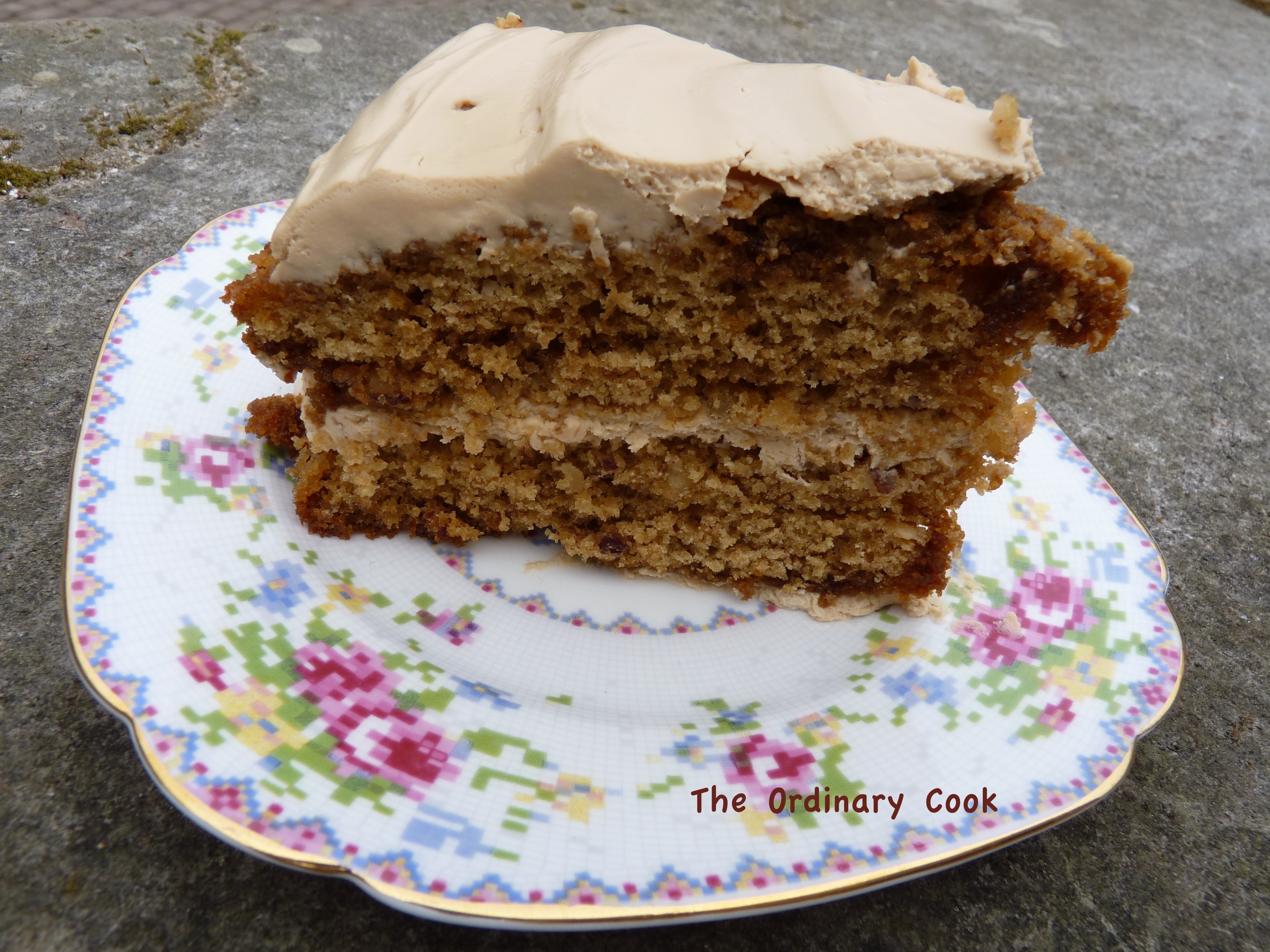
Coffee and hazelnut cake

coffee and hazelnut cake

I made this cake for a friend. A few weeks ago she was taking her dog for an early morning walk, slipped and managed to break her ankle in three places and dislocate it. She now has a bionic ankle made good with more pins than a pin cushion on the British Sewing Bee. She is on the mend but still has a good few weeks of recovery to go.

This cake was made to make her feel loved. I have known her since we were 11, (so that is quite a few years), and I consider her as one of my closest friends, and yet I had managed to never notice that she doesn’t like coffee. How did that happen? However, (and I’m not sure if she was just being polite at this point) she did eat a rather hearty slice and asked me to leave her a couple of slices for the next day. Mr OC, who adores coffee, loved this cake. It is drenched with a coffee syrup as soon as it comes out of the oven which makes it deliciously moist. The topping is not your normal sweet buttercream but offers an excellent contrast of creaminess with just an edge of sourness from the quark. You could add more sugar if you were after something a bit sweeter but I liked the contrast very much.

Michele from Cooking at Home recently posted about her coffee cake which never lets her down and everyone loves. I will be making her version next time as I like the idea of the crunchy topping very much.

For the sponge:

1 tbsp instant coffee
scant tbsp hot water
175g (60z) self-raising flour
1 tsp baking powder
175g (6oz) softened butter (room temperature)
175g (6oz) caster sugar (I used golden)
3 eggs
50g (2oz) hazelnuts, finely chopped (I whizzed whole hazelnuts them in the food processor for a few seconds)

For the syrup:
1 tbsp instant espresso powder
50g (2oz) demerara sugar
50ml (2floz) boiling water

For the filling and topping:
250g (9oz) mascarpone
200g (7oz) Quark or fromage frais
1 tbsp reserved coffee syrup
1 tbsp of dark soft brown sugar (or more according to your taste)

You will need two sandwich tins (mine are 7½ inch or 19 cms) greased and the bases lined with baking paper. Preheat the oven to 170°c, gas mark 3 or use the centre of the baking oven of the four oven Aga.

Method

First mix the coffee powder with the hot water for the cake and allow to cool a little.

Then place all the ingredients, including the coffee mixture into a bowl and mix well until everything is well combined and the batter is a soft dropping consistency. Add a tablespoon of milk if you think it needs to be a little softer. Divide the mixture between the sandwich tins. Place the tins in the centre of the oven and cook for 25-30 minutes until the sponges are beginning to shrink from the sides of the tin and are springy to the touch.

Whilst the cakes are cooking make the syrup. Place the coffee powder and the sugar in a heatproof jug and pour the boiling water over. Stir until the sugar has dissolved. This will take a minute or two.

As soon as the cakes come out of the oven pierce them all over with a skewer or cocktail stick and then spoon the syrup over as evenly as possible. Reserve a tablespoon of this syrup to add to the filling/topping.

To make the filling, place the mascarpone and quark into a bowl and mix until combined. Add the reserved coffee syrup and the sugar and mix until well combined. Add more sugar if you feel you need it  but bear in mind that a little sourness is a good contrast to the sweetness of the cake.

When the cakes are completely cold turn them out of the tins and place one onto the serving plate. Pile half the filling on top and then top with the second cake. Swirl the remaining filling over the top of the cake.

Take to a coffee-loving friend, or a friend that doesn’t like coffee – the choice is yours. (Sorry, H).

By the way, we had our holiday. A lovely, relaxing 10 day break on Madeira. We saw the sun again and let it warm our bones. What a pleasure. We came back refreshed and ready for action. Now let’s just hope the English sun peaks its head out from behind the clouds. Come on sun, don’t be shy.

Coffee and hazelnut cake Read More »