theordinarycook

The Ordinary Cook loves to cook. If I am not cooking or baking then the chances are I am thinking about cooking and baking. I love sharing recipes and ideas and my website is my space to do this.

Lemon and yoghurt cake

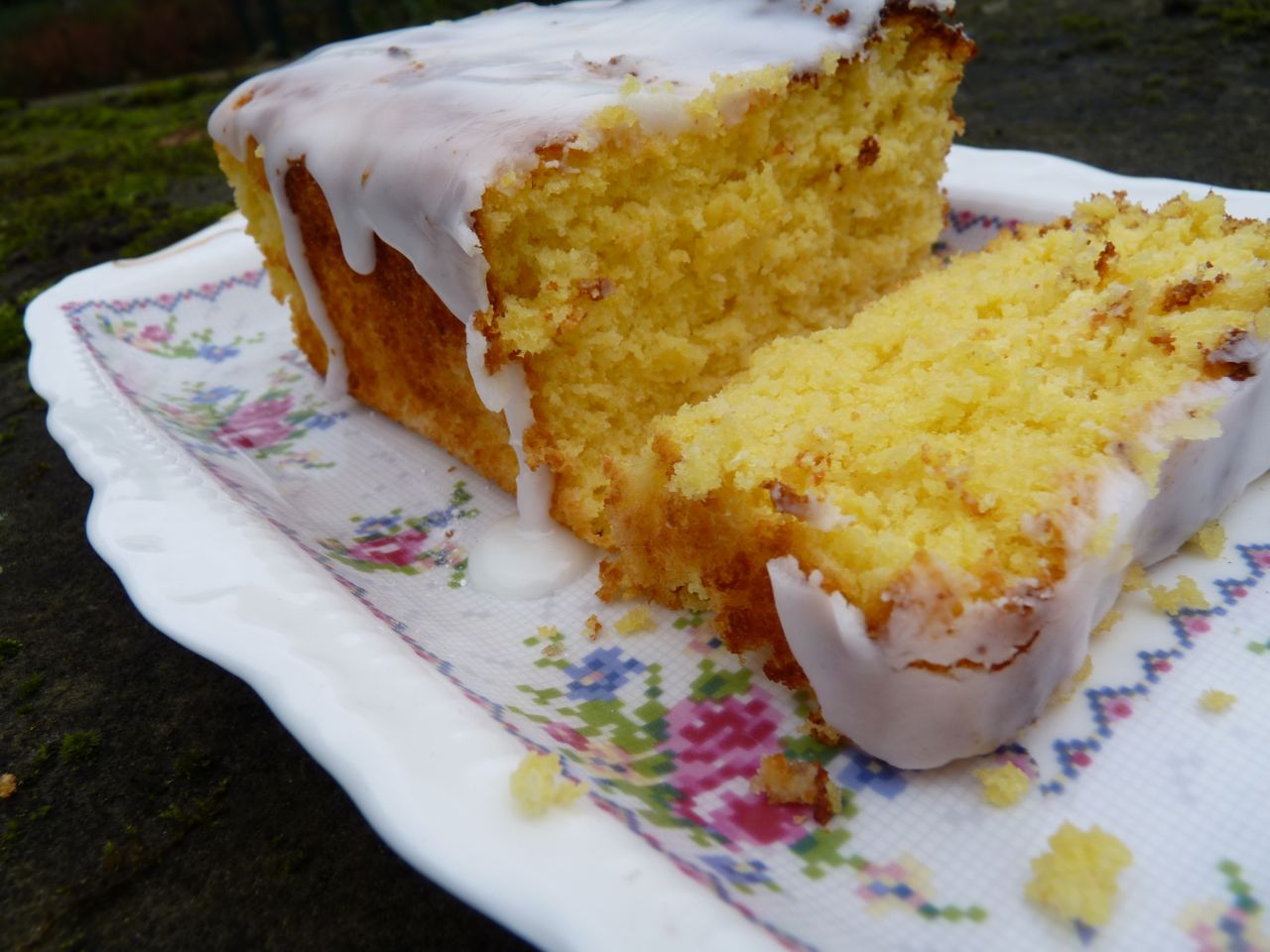
lemon and yoghurt cake 2

I was sent a box full of yoghurts by Chobani this week. I would have taken a picture but Mr OC likes yoghurts and has eaten most of them before I have had a chance to get the camera out of the drawer. I was initially a little bit disappointed that they were all flavoured yoghurts. I am partial to a plain yoghurt and I wanted one to cook with. However, there was a lemon flavoured one and I have been craving a lemon cake recently. Problem solved. You can, of course, just add plain greek yoghurt, but this lemon flavoured yoghurt made the cake extra lemony – always a good thing in my opinion. The cake is very light, very lemony and has a very slight crunch with the semolina. I topped it with a lemon icing which is just icing sugar and lemon juice mixed to a pouring consistency.

3 eggs, separated
100g caster sugar
grated rind and juice of 1 lemon
150g lemon flavoured or plain greek-style yoghurt
50g semolina
50g ground almonds

Method

Preheat the oven to 180°c, gas mark 4 or use the centre of the baking oven of the Aga. Grease and line a 2lb loaf tin or an 18cm round cake tin.

Beat the egg yolks, sugar and rind and juice of the lemon together until light and fluffy and the whisks are making a trail in the mixture. Fold in the yoghurt, semolina and ground almonds. Beat the egg whites until they form stiff peaks. Fold the egg whites into the cake mixture.

Pour the mixture into the cake tin and cook in the preheated oven for 25 – 30 minutes until it feels firm on top and a skewer comes out clean.  Leave it in the tin for ten minutes and then turn out onto a wire rack.

When cool, ice with a lemon icing using 100g icing sugar and the juice of a lemon, adding the lemon juice gradually as you might not need all of it to get the pouring consistency that you want.

Thank you to Amy of Chobani for sending me free samples of their yoghurt. No fee was received was for this post.

Lemon and yoghurt cake Read More »

Crabapple and rosehip jelly

rosehip and crabapple jelly

I intended to make rowan berry and crabapple jelly this year. The rowan berries have drooped heavily this year. In fact, on our usual walk I have noticed several new rowan trees. Obviously they aren’t actually new trees I just haven’t noticed them before. Which makes me think that this year the trees must be particularly heavy with berries as I am not usually one to miss a foraging opportunity. Anyway, off I marched with my carrier bags, one for the crabapples, one for rowan berries and one just in case. You never know what you might spot.

It wasn’t until I came to actually pick the rowan berries that I noticed quite how tall each of my newly spotted trees was. Why hadn’t I noticed before that I needed to be several feet higher to get the berries? I managed a handful from a sapling growing on the side of a brook. Time for a rethink. That was when the spare carrier bag came in handy for the rosehips.

I made rosehip syrup last year in an effort to ward off any chesty coughs. So this year, we will be having crabapple and rosehip jelly by the spoonful if the common cold dares to visit. The rosehip is high in vitamin C and during World War II people were paid by the pound for rosehips so that the syrup could be made and given to children.

The apples and rosehips are bubbling as I write this draft and the scent is mesmerisingly good. I am looking forward to this jelly accompanying our winter sunday roasts and perhaps added to some herb teas. I think a spoonful might be a good addition to a sage tea to sooth sore throats.

750g crab apples
300g rosehips
water to cover
sugar, 450g for every 600ml of juice

Method

Wash the crab apples well and cut out any bruises. Chop roughly.

Wash the rosehips and remove the old flower and check for any creatures that might be hiding there. Blitz them in a food processor or chop finely. Bearing in mind that they are famed by schoolchildren everywhere for their qualities as itching powder, so you might want to wear gloves when handling them.

Place the apples and rosehips in a large pan and just cover with water. Bring to a simmer and simmer away until the fruit is soft. Put the pulp into a  jelly bag or a clean tea towel (I boil one in a pan two thirds filled with water for about ten minutes to make sure it is clean) and allow the fruit to strain over a large bowl. Don’t squeeze the bag or the jelly will be cloudy. A lot of recipes say that you need to leave it overnight, but the liquid in mine had drained through in a couple of hours, leaving a dry pulp behind.

Place a couple of saucers in the fridge for testing your jelly later. Measure your juice and pour into a large clean pan. Bring to boiling point. Add 450g sugar for every 600ml of juice and stir to dissolve. Boil rapidly once the sugar has dissolved and boil until setting point has been reached. You may have a scum come to the surface. Scoop this out. Setting point should take about ten minutes. But test for setting point after five minutes. To test for setting point take out one of the cold saucers and place a teaspoonful of the jelly onto it. Allow to cool and then push your finger through it. If it wrinkles then it is ready. Pour into hot sterile jars and seal.

I love the colour of this jelly, it’s much paler than the crabapple jelly I made two years ago. It has more of a rose blush about it. It’s well worth a try.


Crabapple and rosehip jelly Read More »

Sesame seed cake

sesame seed cake


This is a cake made because of the right things happening at the right time. A cake created out of fate perhaps. I would never have thought of making a sesame seed cake. It seems like an unlikely pairing – cake batter with sesame seeds. However, I am here to tell you that you must try it. It has a soft moist crumb that is lifted with the slight bite of the sesame, you can just taste the richness of the toasted sesame oil and it’s a cake that improves with sitting about for a few days.

A friend gave me a packet of sesame seeds that he wouldn’t use. I love gifts like this as it forces you to think of something to do with an ingredient that you might not normally buy. We had also taken the girls to Birmingham to see the new library, which by the way if you find yourself in the West Midlands then you must visit. I love the building, from the outside it looks like a giant cake, which is always a good thing. The inside is pretty impressive too, you travel up the escalators past rows and rows of lovely books. It is deeply pleasing.  It has lots of interesting spaces where you can squirrel yourself away for hours – should you have the time. It makes me wish I was back at university, but I fear that I have already spent far too much of my life in that institution already. I find the whole concept of the city’s flagship building being a library very satisfying indeed. Anyway, back to the point. A visit to Birmingham is not complete without a visit to the Chinese supermarket. This time, among other treasures, I picked up a bottle of toasted sesame oil. So I found myself in possession of both sesame seeds and toasted sesame oil making this cake possible. How very glad I am for auspicious circumstances.

50g sesame seeds
120g softened unsalted butter
200g caster sugar
1 tsp vanilla extract
2 ½ tsp toasted sesame oil
2 eggs
150g plain flour
50g ground almonds
1 tsp baking powder
¼ tsp salt
120 ml butter milk (or milk with a few drops of lemon juice mixed in and left to stand for ten minutes)

Method
Grease and line a 20cm cake tin and preheat the oven to 180°c, or use the baking oven of the Aga.

Lightly toast the sesame seeds in a dry pan until lightly golden and tip out onto a plate and set aside.

Cream the butter and sugar together until pale and fluffy and then add the eggs one at a time, beating well between each addition. Beat in the sesame oil and the vanilla extract. Fold in the flour, baking powder, ground almonds, salt and sesame seeds and then fold in the buttermilk.

Spoon the batter into the cake tin and level the top carefully. Bake in the centre of the oven for 25-30 minutes until a skewer comes out clean. Leave in the tin for ten minutes and then turn out to cool on a wire rack, peeling off the lining paper.

Sesame seed cake Read More »

Cardamom and almond steamed pudding

cardamom and almond steamed pudding


A steamed pudding rounds off a sunday roast better than most puddings I find. My girls both love a syrup sponge. Yesterday I thought I would fancy it up a bit. The addition of freshly ground cardamom adds a delicious scent and the crunch of lightly toasted almonds adds bite to the squidgy, teeth-achingly sweet syrupy sponge. I did make a mistake though. I didn’t make custard to go with it. Last time I made custard after sunday lunch I curdled the eggs trying to cook it too quickly. It’s easier to get a pot of cream out of the fridge. But this pudding deserves custard and I shouldn’t have shied away from it. I won’t next time.

This recipe is inspired by one in Hilaire Walden’s Glorious Puddings, and the title of this book says it all. I have made a few changes to make it my own.

50g flaked almonds
2 tbsp golden syrup
175g softened butter
175g caster sugar
4 green cardamom pods, seeds removed and bashed to a powder
3 eggs
100g self-raising flour
100g ground almonds

Method
Place the flaked almonds in a dry pan and place over a medium heat until they are lightly toasted. Pour onto a plate and set aside until you are ready to serve the pudding.

Grease a 1½ pint capacity heatproof bowl with a little butter. Take a teaspoon of ground almonds and tip into the bowl and swirl around until it gives a light coating all over. Tip out any excess. Spoon the golden syrup into the bottom of the bowl and set aside.

Fill a large saucepan half-full with water and place a small plate or trivet at the bottom. Bring to the boil.

Beat the butter, sugar and ground cardamom together until pale and fluffy. Add the eggs  one at a time and beat well between additions. Fold in the flour and the ground almonds until well combined. Spoon carefully into the bowl over the syrup. Level the top carefully. Cover with a pleated piece of greaseproof paper and tie with string. Place carefully into the pan of boiling water and cover with a tight-fitting lid. This needs to steam for 45 minutes until a skewer comes out clean. I place the pan into the simmering oven of my Aga once it is boiling. I tend to leave it longer than 45 minutes. Yesterday it sat in the pan in the simmering oven for about two hours while I made and ate dinner with no harm coming to it.

Carefully remove the paper, remembering that steam will rush out, place a deep serving dish on top of the bowl and carefully turn it over. The pudding should just slip out, sometimes making a satisfying sucking noise as it does so.  Sprinkle the almonds over the top and serve with custard.

Cardamom and almond steamed pudding Read More »

Cherry brandy

Cherry brandy on day one

Cherry brandy has always been one of my favourite tipples. I remember it being in the drinks cabinet when I was young and enjoying the sweet smell of it in my mum’s glass. It’s probably very 1970’s to admit to such a thing.

I have made damson gin or vodka lots of times thanks to our tree but I didn’t think I would get the chance to make my own cherry brandy. But the delivery of a crate of cherries from our friend made it a very tempting possibility.

It’s very easy, but you do need a large jar with a well-fitting lid, so that you don’t have a disaster when it comes to the shaking of the jar bit.

One of my favourite uses of cherry brandy now is to add a good slug to our regular cup of hot chocolate in the evening. Now there’s a sign of our age and present mentality.

I used a litre of brandy because I had so many cherries to get through, but you can half the quantities for a 50cl bottle. I used light coloured cherries so if you use dark cherries the colour of the resulting brandy will be deeper.

1 kg cherries
1 litre brandy (I used the cheapest bottle on the shelf)
300g sugar

Method

Find a jar that has a tight-fitting lid that is large enough to take the cherries and the liquid.

Prick the cherries several times and place into the jar. If you prick them over the jar you capture most of the juice, although it is a very good idea to wear old clothes and an apron. My formerly white ceiling bears testament to how far cherry juice can travel. Add the sugar and the brandy. Fit the lid, I then sellotape it to make extra sure of a tight fit. Give the jar a good shake. Place the jar somewhere where you will see it daily to remind you to shake every day for the next week. After that shake once a week for the next two months, tasting it occasionally to see if it is cherry enough for you. Once it is, strain back into sterile bottles. You can now drink it or if you can bear it leave it for 12 months to mature.  I plan to use the cherries in a chocolate dessert. It would be a shame to waste them.

Cherry brandy after 3 weeks

Cherry brandy Read More »

Pickled walnuts – a tale NOT a recipe

green walnuts

The reason that this is a tale rather than a recipe is that I am not convinced that I have done this pickling of walnuts thing quite right and I don’t want you, my dear reader, making the same mistakes as I have. I have found too many conflicting recipes to make any sense of the procedure. So, please, feel free to read this and then promptly go off and do your own research and come to your own conclusions. I hope to try again next year and experience might go in my favour.

I have never pickled walnuts before, in fact I don’t think that I have ever eaten a pickled walnut. It has been on my list of things to do, though, for a long time. My generous friend, spoken of previously, has a lovely walnut tree. Walnuts wear the little green jackets that you can see in the photo above and the hard brown shell that we are all so familiar with forms underneath this jacket sometime between June and September, depending on the weather conditions and probably all sorts of other factors. A pickled walnut is the entire green seed pod and not just the nut inside. If you want to pickle your walnuts you need to get them off the tree before the hard shell starts to form. So, sometime towards the end of June or the middle of July.

Please be aware that the juices from a walnut will stain your hands decidedly yellow to dark brown depending on how much contact you have with it. Wear gloves whenever you handle them. I did and I still managed to have yellow hands when I finished pricking them.

The green pod has to be pricked with a fork or skewer several times and soaked in a salt brine for two weeks, changing the brine after the first week (or every three days, depending on whose advice you take). If your fork meets any resistance then discard this walnut as the shell has started to form and you were too late in your picking. It was at this brining  stage that I came across my first problem – a mould developed on the top of the brine. This surprised me as I didn’t think that a salt brine would attract mould. Perhaps my house in midsummer, with the Aga still pumping out at full bore, is just too warm for pickling walnuts. I have, however, ignored the mould. The walnuts submerged in the brine seem to be unaffected by this top layer of mould so I have carried on with the pickling process.  However, whilst I write this post I am considering that my salt brine was just two weak. Now that I have read Mrs Beeton’s wise words, (it didn’t occur to me to do so before brining) her salt brine at 500g salt to each litre of water is at least twice as much and sometimes four times more salt than others recommend.

The walnuts are still green, although a slightly darker green than before, when they come out of the brine. At this point you spread them on trays in a single layer and leave to go black. My walnuts went black very quickly, much quicker than I expected, in fact by the next morning. When they have turned black you pickle them. Now, my problem has been the conflicting and sometimes vague recipes that I have found online for this. One suggested that you use a sweet vinegar (malt vinegar, with the addition of brown sugar in a 2:1 ratio and spices such as cinnamon, cloves, star anise, peppercorns) bring it to a simmer and then the walnuts are added and allowed to simmer for 15 minutes. Another suggested that you just pour a spiced pickling vinegar over the walnuts in a jar and allow to marinate. Well, it seems to me that there is quite a difference there. Mrs Beeton, a woman of good sense, and surely someone that can be trusted in all things kitchen, advises that you boil the vinegar and pour it, still hot, over the walnuts in the jar, covering them completely.

I decided that as I like pickled damsons in a sweet vinegar so very much, that I would try the sweetened pickle vinegar, bringing 1 litre of malt vinegar, 500g of dark brown sugar, a piece of cinnamon, four cloves, a few peppercorns and a star anise to the boil. Add the 1 kg of brined and blackened walnuts and leave to cool for 10 minutes before placing into hot sterile jars. Covering completely with the vinegar.

There, you see, I have created a new method and probably more confusion. The walnuts are sitting in jars as I type. I will let you know how they taste in a month’s time (when they will be ready according to Mrs Beeton and not 5 days like some on the internet will tell you). Who knew that pickling walnuts would be such a minefield?

If you have pickled walnuts in the past and would like to pass on your wisdom, I would be forever grateful, that is unless you confuse me further.

Update October 2013 – Just to report we have tried the walnuts now and I can’t say I am impressed or unimpressed. They taste like something pickled but not particularly walnuty. Although we did try them with friends and one of them commented that she thought they were walnuty. Another friend suggested that they are good in a beef stew, so that’s what I shall be trying next for these little pickled things. 

Pickled walnuts – a tale NOT a recipe Read More »

Broad bean puree

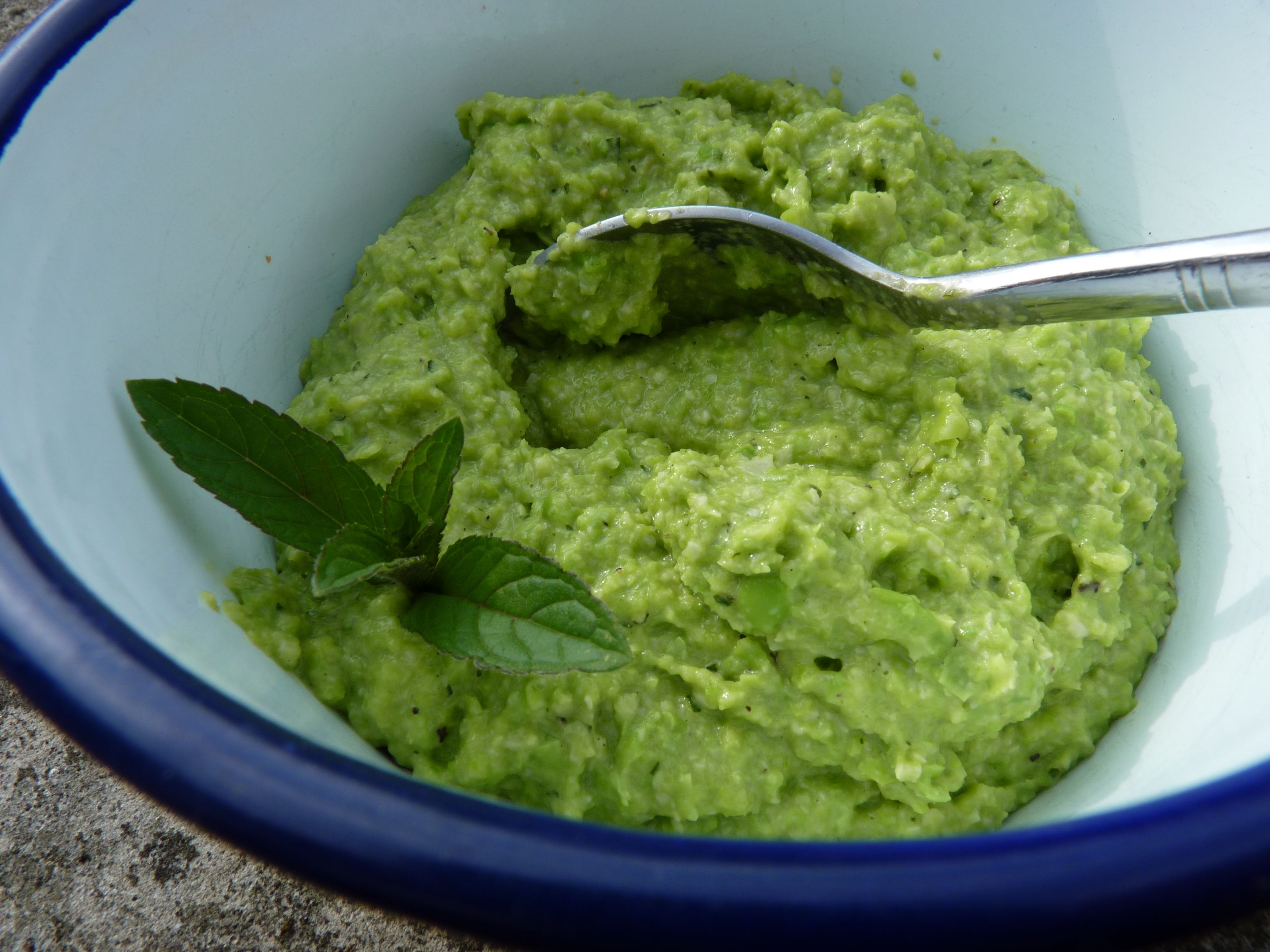
broadbeanpuree This isn’t a recipe that calls for exact measurements. Use however many broad beans that you may have, blanch them for two minutes in a pan of boiling water, drain and rinse with cold water. Then put them into a food processor, or a food mill, with as much garlic as you fancy, add a couple of small sprigs of mint and a glug or two of olive oil and whizz or mill into a purée. Taste and add salt and pepper and more oil if you think you need it. It’s delicious on toasted bread; bruschetta style, lovely as a dip  for other veg; hummus style, or added to pasta. For the latter I added a splash of cream to loosen it up a bit and I added some slow-fried courgettes into the mix.

I had some left over yesterday and added it as a layer to a moussaka, spreading it over the aubergines. Now I admit this didn’t make for the best colour combination – a sort of murky greeny-brown, but the taste was amazing, lifting the moussaka and giving it a summery zing.

We have been having it a lot, as you can probably tell.

Broad bean puree Read More »

Cherry pie

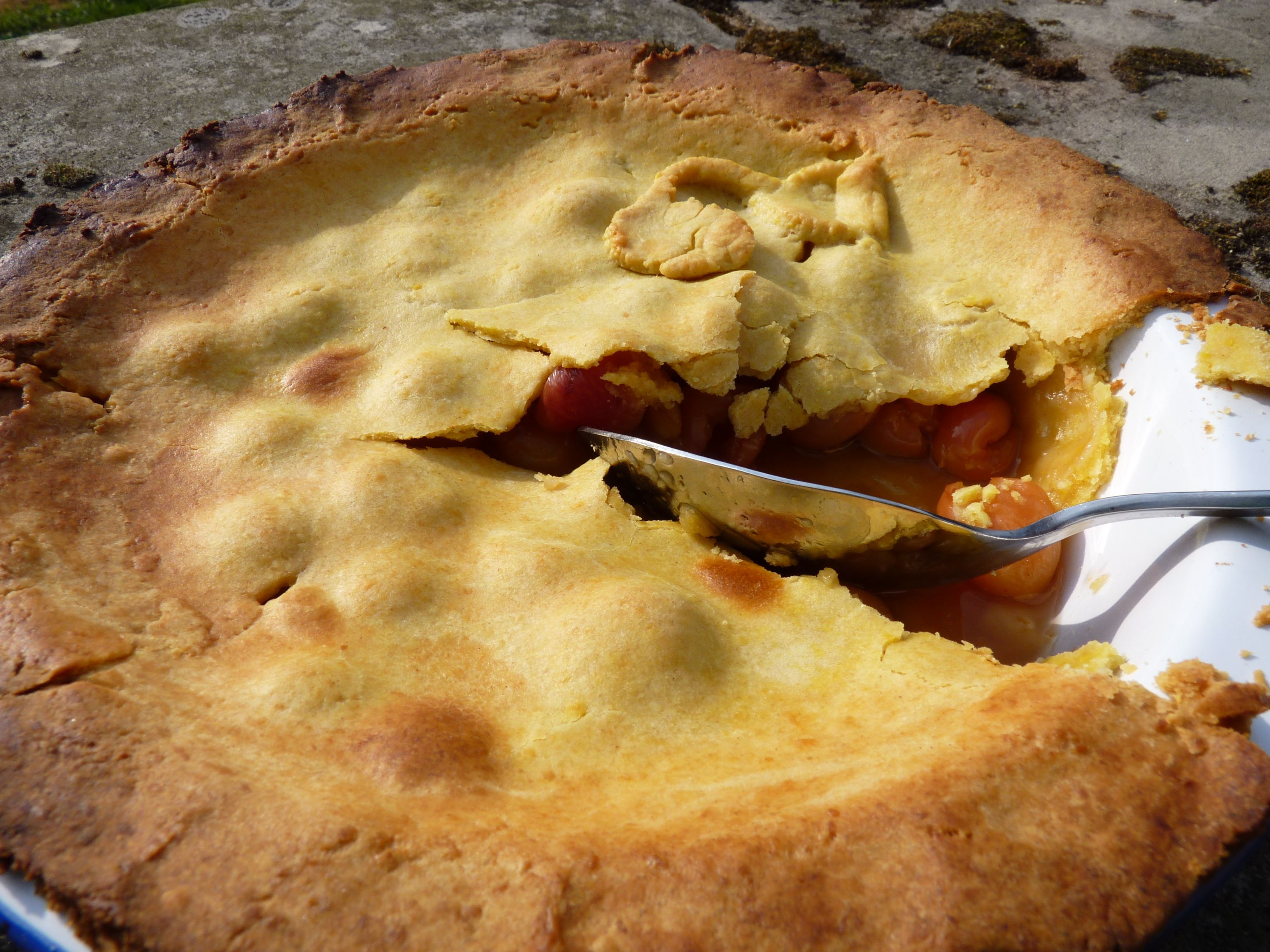
cherry pie

I have mentioned before my generous friend with a wonderful garden. This week he has dropped off several baskets of freshly picked goodies, including cherries and green walnuts. I am very excited about the walnuts as I have wanted to pickle walnuts for a long while and there will be a post about this coming soon. But first the cherries. Here they are in all their glory.

cherries in bowl

Aren’t they beautiful? I love the blushing appearance and they are deliciously sweet. I decided to make a cherry pie with a third of them and the rest have been used to make one of my favourite drinks, cherry brandy, which will make its own post soon.

I have never made a cherry pie with fresh cherries before as it is unusual to have a bounty of cherries in England. You really do need to have access to a tree, either yours or a friend’s, and you need to get in there before the wildlife does. To buy cherries from the supermarket for a pie would seem like the ultimate extravagance as the price can be astounding. Many a time the girls have convinced me to pick up a bag of cherries, for me then to nearly have heart failure when the price appears on the scales. So it felt like a very special treat indeed to be serving this pie for sunday dessert.

500g cherries, stoned
50g vanilla sugar (or ordinary sugar if you don’t have any vanilla flavoured)
1 dessertspoon cornflour

200g plain flour
2 tbsp icing sugar
100g butter
2 egg yolks
1 -2 tbsp cold water

Milk to glaze

Method

I macerated the cherries with the sugar and cornflour for about an hour, whilst the pastry was made and chilled but I don’t really think it is necessary. Mix them together well in a bowl.

Make the pastry by mixing together the flour and the icing sugar and rubbing in the butter using your fingertips until it resembles breadcrumbs. Add the egg yolks and start to bring together into a dough, adding the water if necessary. You can do it all in a food processor too for ease. Shape the pastry into a flattened disc and wrap in clingfilm and chill for at least 30 minutes in the fridge.

Once chilled, remove the clingfilm from the pastry and cut into two pieces one slightly larger than the other. Roll the larger piece to fit your pie dish and press into the sides. Pour in the cherry mixture, spreading to an even layer. Brush a little milk around the rim of the dish. Roll out the smaller piece to fit the top of the dish and seal well around the edges. Brush all over with a little milk and cook in a preheated oven at 200°c, gas mark 6, or on the floor of the roasting oven of the Aga for 25- 30 minutes until the pastry is golden brown.

Serve warm with cream or custard, but it’s good cold the next day too.

Cherry pie Read More »

Garden pasta

garden pasta


It’s that time of the year when all that hard work in the garden starts to pay off. I can go out, see what’s good and plan dinner around it. I love it.

This dinner is the perfect example, everything but the flour for the pasta, the olive oil and the bacon came from our garden. I can’t say our garden is the tidiest garden you will ever see. There are far too many weeds competing with the veg, but it does its job in supplying a few dinners and desserts.This pasta makes use of the broad beans, the peas, the dill and one of three golden beetroot that survived whatever it was that saw the rest of the row off.

I made some fresh pasta. I roasted the beetroot, wrapped whole in foil, for about thirty minutes until tender.Then peeled it and sliced it.  Showed the broad beans some boiling water, and then cooled them under a running tap. Fried the bacon in a splash of olive oil. Added the uncooked peas, the broad beans and the beetroot until they were all hot and coated in oil/bacon fat. I added a bit of chopped dill to the pan and then drained the pasta, reserving a spoonful of the pasta water, adding both to the bacon pan and gave it a swirl. Grated parmesan finished it off a treat.

Thank you garden.

Garden pasta Read More »

Winberry muffins

winberry muffins


If you go down the woods today…..

Or, indeed walk up a large hill, then you may well be in for a surprise. No bears having picnics (I hope) but bushes of these delicious little bursts of purpley goodness. My lovely friend and I try to take a walk each week. It’s always a great walk whatever the weather. We put the world to rights in an hour and a half. At the top of the hill you are always rewarded with a wonderful 360° view, whether that is cloud shrouded fields, or crops withering under a heat haze. But at this time of the year you are also rewarded with winberry bushes. There is a mass of them, covered in these tiny berries. They are time-consuming to pick and this is made slightly more difficult, but also more hilarious, by my friend’s dog cavorting through the bushes, stopping to hoover some of the berries up with his front teeth. You don’t get many in fifteen minutes of picking (unless you are a dog), but you get enough for a couple of batches of these muffins. So, well worth the purple stained fingers.

winberries


The winberry is a cousin of the blueberry but much smaller. It is known by lots of other names – bilberry, whortleberry, blaeberry, windberry, whinberry etc etc. They grow on nutrient poor acidic soil and my friend and I were discussing how amazing it is that on this windswept hill, which spends a fair amount of time under low slung cloud and takes the worst of the winter weather these little bushes thrive and produce these delicious fruits.

Please remember that if the land on which the winberry grows has an owner then you should ask their permission before foraging. Take only a few, leaving plenty for the birds and mammals which rely on them. Most importantly, make sure you know for certain that it is a winberry bush and not something poisonous.

Makes 12 mini muffins (fairy cake size) or 6 muffins.

150g plain flour
2 tsp baking powder
25g caster sugar
1 egg
80g butter
200ml milk
1 tsp vanilla extract
80-100g winberries (or less if you haven’t managed to pick that many)

Method

When making muffins, lightness is key, so sift the flour and baking powder and don’t overmix.

Sift together the flour and the baking powder into a large bowl. Stir in the sugar gently. Make a well in the centre.

Melt the butter and add to the beaten egg, the milk and the vanilla extract in a jug.

Pour the liquid into the flour and mix very briefly. Add the winberries and mix just enough to distribute them.You should still have some lumps of flour.

Spoon into muffin cases in a patty tin. I used cupcake sized cases to make mini muffins and made 12 rather than 6 large ones.

Place in a preheated oven at 200°c, gas mark 6 for 15-20 minutes. I took them out of the oven five minutes before they were ready and sprinkled demerara sugar on their tops and continued to cook until the muffins were golden brown. This gives them a slightly crunchy top.

half eaten winberry muffin

Winberry muffins Read More »