theordinarycook

The Ordinary Cook loves to cook. If I am not cooking or baking then the chances are I am thinking about cooking and baking. I love sharing recipes and ideas and my website is my space to do this.

Chocolate chestnut cake

chocolate chestnut cake


I must share this cake with you. I have been making it a lot in recent weeks. Mostly because it keeps getting eaten before I have had chance to take a photo of it. Each time I fetch it out of the oven I say ‘now, I must get a photo of this cake this time’, then it’s gone. But I have also been making it because (and this is a really good excuse) chestnut flour doesn’t keep well, so you must use it quickly.

I buy my bread flour by the 25kg sack full from Shipton Mill. To get free delivery I always add to the order and this time I included chestnut flour. It’s not cheap but I have wanted to try it for ages. I am glad I did. It is seasonal so you may have to wait to make this cake.

This cake is fudgy and dense, like a brownie in texture. I have tried all caster sugar, all light brown sugar and half and half caster with muscovado. My favourite is to use all light brown sugar. It gives a caramel edge without being too heavy or bitter. The cake is even better the day after it is made as it just gets fudgier. Be careful not to overcook it though. You want a slight wobble left in the centre when you take it out of the oven. This will firm up when the cake is cooled and your cake will be lovely and moist.

If you have chestnuts rather than chestnut flour then I can recommend my other Chocolate Chestnut Cake as being equally delicious.

200g dark chocolate (at least 70% cocoa solids and stuff that you enjoy eating)
200g unsalted butter
200g soft light brown sugar
4 eggs, separated
100g chestnut flour

Method

Preheat the oven to 170°c, gas mark 3 or use towards the bottom of the baking oven of the Aga. Grease and line a 20cm cake tin with baking parchment.

Break the chocolate into small pieces into a bowl. Cube the butter and add to the chocolate. Melt the butter and chocolate in the bowl over a pan of gently simmering water (making sure the water does not touch the base of the bowl). When melted stir gently to combine.

Whisk the egg yolks and the sugar together until well combined and slightly paler in colour.

Whisk the egg whites in a separate, scrupulously clean bowl to firm peaks.

Add the melted chocolate and butter mixture to the egg yolks and sugar mixture and combine well. Fold in the chestnut flour. Add one third of the egg whites, mixing in well so that the mixture is light and the remainder of the eggs can be very gently folded in, retaining as many of the tiny bubbles as possible. When all combined, gently pour the mixture into the lined tin and place in the preheated oven and bake for 20-25 minutes. It may take a few minutes longer depending on your oven but check at 20 minutes as you don’t want to overcook it.

Leave to cool in the tin for about 20 minutes and then turn out onto a plate. You can dive in straight away or restrain yourself and keep until the next day.


Chocolate chestnut cake Read More »

Candied peel scones

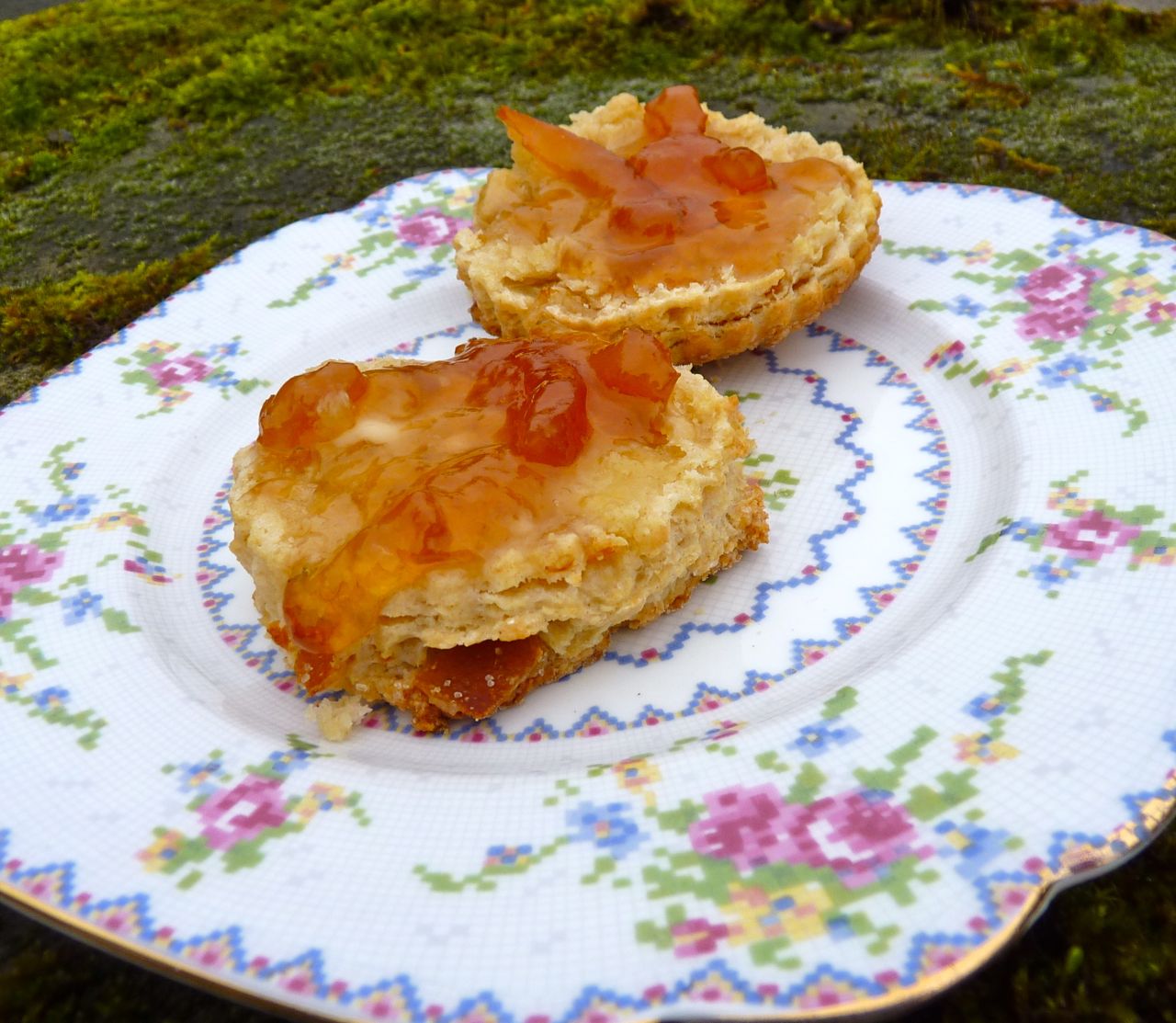
candied peel scone

It felt like a scone morning this morning. I have made some marmalade and so felt the urge to make scones that would go well with marmalade. I have some candied peel in a kilner jar on the side and so was born a lovely scone.

scones with marmalade

You don’t have to make your own candied peel to make these but I urge you to give it a try. It’s very easy, lasts for ages and is much more delicious than any you can buy. Try the link above for my recipe for candied peel.

Makes 6-8 scones

300g plain flour
1 tsp baking powder
20g caster sugar
50g butter, cut into dice
20g candied peel, cut into small pieces
1 egg
100ml plain yoghurt
50ml milk

Egg wash, made with 1 egg and a dessertspoon of milk whisked together
caster sugar for sprinkling on top

Method

Preheat the oven to 220°c, gas mark 7 or use the floor of the roasting oven of the Aga for ten minutes and then move to the top of the roasting oven for the last two minutes to brown.

I make my scones in a food processor, which makes it easy and quick. Place the flour, baking powder and sugar in the bowl of the processor. Add the butter and pulse until it looks like breadcrumbs. Mix the yoghurt, milk and egg together in a jug and pour into the flour. Add the candied peel. Pulse until it just begins to come together. Tip out onto a surface and bring together into a disc.

If you don’t have a processor then place the flour, baking powder and sugar in a bowl. Add the cubes of butter and rub in using your fingertips. Add the yoghurt, milk and egg (that you have lightly whisked together) and the candied peel and bring together with your hands. This will only take a few seconds.

I then tend to pat the mixture into a round with my hands, but you can use a light touch with a rolling pin, to about 2.5cm thick. Stamp out scones using a biscuit cutter. Do not rotate the cutter, just stamp down and lift out. If you rotate you prevent them rising properly. Re-roll the trimmings and stamp out until you have no mixture left. Place onto a floured baking tray, brush with egg wash just on the top and sprinkle over a layer of sugar. Bake in the preheated oven for 10-12 minutes until golden and crusty on top. Leave for about 2 minutes and then eat. These are best eaten straight out of the oven.


Candied peel scones Read More »

Iced fingers

iced fingersIced fingers are simple fare. Enriched bread dough slathered with a plain, or if you want to push the boat out, lemon icing. But simple fare can be very good, and these are very good.

Talking of pushing the boat out, it almost came to that this week here. The girls’ school was closed due to a high risk of flooding and so these were baked as compensation. You know how terrible it is be sent home from school only an hour after you arrive. Both girls were bereft and in need of something comforting.

Of course they weren’t, they were as high as kites with the excitement of it all. Still comfort food was in order anyway and they wanted to bake.

These are very good with a cup of tea, or in your lunchbox the next day, if school is open again.

Thankfully, our home is high up from the river and only our drive is affected by the flood waters. However, many homes and businesses in the UK are under water right now and my heart goes out to them. Let’s hope the rain gives way to sunshine soon and the waters begin to subside and people can start to sort out the mess that they have been left with.

Makes 12 iced fingers

300g strong white flour
250g plain white flour
50g white sugar
5g easy bake yeast
10g fine sea salt
150ml warm milk
150ml warm water
50g softened butter
1 egg

For the icing:
200g icing sugar
3-4 tablespoons of water or lemon juice or a mix of both

Place the flours, sugar, yeast and salt in a large bowl. Add the milk, water, butter and egg (you may not need all the water so hold some back) and mix with your hands or with an electric dough hook until you have a soft, slightly sticky dough. Knead for about ten minutes until smooth and elastic. Shape into a ball and place in the bowl and cover with a large plastic bag. I use a bin bag. Leave to rise for about two hours. The time needed will depend on the warmth of your kitchen. When it has doubled in size, deflate it gently and divide into twelve pieces. Shape each piece into a sausage shape by folding the dough under itself so that you get a good strong structure. Place them all onto a greased baking tray and cover again with the plastic bag for about 30 minutes until they have doubled in size again. They may be touching each other on the tray now. This is fine, they tear easily away from one another when cooked.

Cook in a preheated oven at 200°c, gas mark 6 or on the bottom of the roasting oven of the Aga for 12-14 minutes until golden brown all over. Remove to a wire rack to cool.

Mix the icing sugar with the water or lemon juice. Do this carefully as a few drops of liquid can make a huge difference to the consistency. You want an icing that spreads easily but won’t run off the bun. Ice each bun. If you are feeling really indulgent you can split each bun horizontally and spread with jam and whipped cream before icing, but why gild the lily?


Iced fingers Read More »

Orange curd

Orange curd

I have just looked back at my post on lemon curd and realised that I wrote it four years ago! Blimey, time flies. I do love lemon curd and so I thought it about time I tried a different flavour. Orange curd is much sweeter than its lemon counterpart and has a richer taste. I have been eating it on my mid-morning toast but it would be good in a tart or in a twist on the lemon meringue.

The recipe I have used is just an adaptation on my lemon curd one, using two medium-sized oranges. However, I have been rereading my copy of Peter Brears’ Traditional Food in Shropshire with its interesting history of the cooking techniques and recipes of my home county. One of the recipes Peter includes is for orange or lemon cheese, which is curd by another name. It is a treat mentioned in Mary Webb’s Seven for a Secret when Gillian Lovekin is trying to win the heart of Robert Rideout by serving him a tea which she hopes will steal his heart.

She set the table with the best china, brought out cranberry jelly, new bread, lemon cheese, visitor’s tea. She put on her best frock, put up her hair, and picked a scarlet geranium from the window to wear in it. She would be as gay, as pretty and as kind as she could. It wasn’t nice of her father to tell him he was only a cowman. And perhaps, if she looked really pretty, Robert would kiss her!
Mary Webb, 1922, Seven for a Secret, p.48

Spoiler alert- it takes a while but she eventually gets her way.

Because oranges and lemons were expensive, the flesh would have been eaten and the peel used to make the orange or lemon cheese. The peel would be simmered in a pan of water for about an hour until tender and then  pulverised until smooth and this would then have been added to the sugar, egg yolks and butter. I have promised myself to try the recipe this way when I have finished the last of this batch. It sounds like a good alternative to making candied peel with the leftovers from marinated oranges.

In the meantime here is the recipe for the curd in the photo.

100g butter
225g caster sugar
2 medium-sized oranges, zest and juice
5 egg yolks or 3 whole eggs, beaten

Method
You can make this in a pan over a gentle heat, if you are brave, or you can make it in a bowl standing over a pan of simmering water. The latter takes longer but the former is more likely to end up with scrambled eggs. I prefer the latter so put the butter and sugar in a heat-proof bowl and stand it over the simmering water, making sure that the water does not touch the bottom of the bowl. Stir until the butter has melted. Add the finely grated zest of the orange along with the juice and the eggs. Stir well and continue to stir regularly until the mixture thickens. This might take 20 to 25 minutes. It will thicken more as it cools. Pour into sterilised jars, seal and when cool keep in the fridge.


Orange curd Read More »

Cherry brandy – the verdict

Cherry brandy

I can reveal that the cherry brandy I made in the summer is delicious and dangerously moreish. We really enjoyed the odd tipple over Christmas. Let’s hope for a good cherry season next year.

The drained cherries are not going to waste either. Some of them became truffles, some were simply dipped in melted chocolate and the rest are in the freezer waiting to be added to pavlovas and black forest gateau type desserts throughout the year.


Cherry brandy – the verdict Read More »

Candied peel

Candied peel

I have been slicing oranges into segments into a pretty bowl, sprinkling them with sugar and the juice of another orange or a clementine and leaving them to marinate for a few hours in the fridge. My eldest then tucks into them for breakfast or after school. I have been throwing the peel into the bin; neither the chickens or the compost likes it. It occurred to me that I should candy it. After all, it is nearly Christmas and there is something very Christmassy about candied peel.

This recipe is very easy to do on the Aga as you can leave the syrup and peel to simmer away in the simmering oven and then dry out the peel in the warming oven or on the top of the warming plate. You don’t need an Aga to give it a go though. A warm airing cupboard or shelf near a fire or radiator will have the same effect.

There is something very satisfying about candying your own peel. It does take a while, and it is a bit of faff, especially when you can buy it. But still, I think it’s worth giving it a go just for the smug glow you get when you look at your jar of candied peel and think to yourself ‘I did that’.  I am going to dip some of the glistening strands into molten dark chocolate for a treat for Mr OC and me, and maybe the children (if I tell them about it). But that’s another day in the not too distant future. Today I am just going to enjoy looking at the jar and enjoy my smug glow.

I used Debora’s recipe as a guide, I didn’t slice it as beautifully though and used only orange peel rather than a mixture of citrus. Four orange rinds needed about half the sugar and half the water Debora gives in her recipe, so 450g of sugar and 600ml water.  At the point when the peel was soft in the syrup I let it cool in the pan and then placed the pieces into a tin, lined with baking paper. I didn’t dredge it with extra sugar.  I put the tin into the warming oven of the Aga and left it there for about four hours, took it out and left it overnight on the warming plate of the Aga. It was beautifully dry in the morning and ready for the jar.

I plan to use the remaining few tablespoons of orange flavoured sugar syrup to glaze an orange flavoured cake.

Thanks must be given to Debora for all the inspiration she has given me over the past couple of years in both her blog and her book.

Candied peel Read More »

Venison and pickled walnut stew

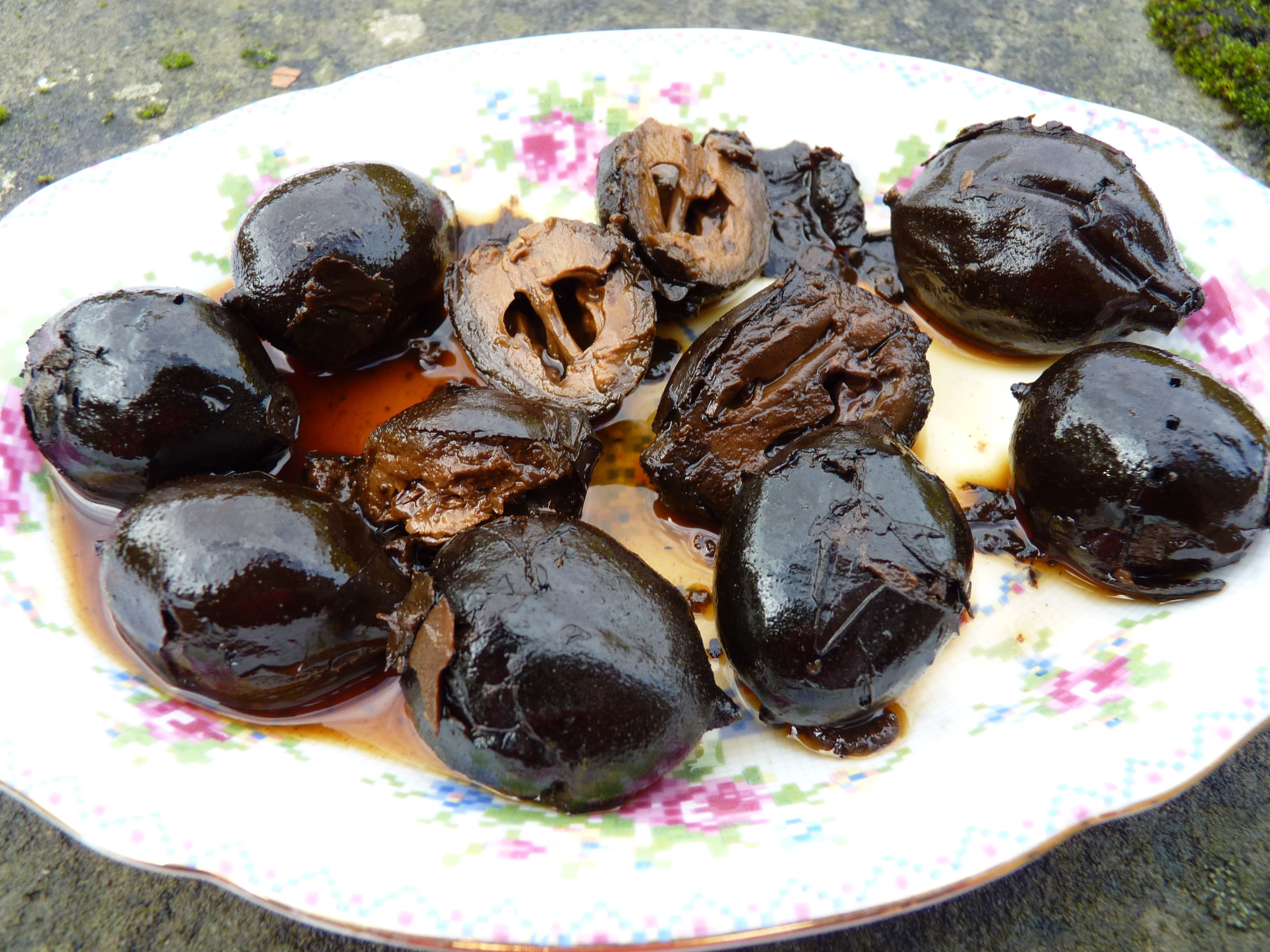
pickled walnuts
Pickled walnuts

I haven’t posted a picture of the stew here because the photo I took, in these darkening evenings, just did not do the stew any justice. When I made these pickled walnuts I imagined I would be enjoying them with cold cuts and cheese. I have now tried them with cheese and I can report they are OK. Actually, they are hard to describe. They don’t taste particularly walnuty. They taste like something that has been pickled. When I was eating them with cheese, a friend that was with us at the time suggested putting them in a beef stew.  That sounded like a fine idea. Now that I have tried the stew I can report that they do add a lovely sweet tang to the gravy. They are, however, still a bit weird to eat. The exterior of the walnut has a grainy texture and the interior is soft. It’s just a  bit odd. I do think though that I will be putting them in more stews if only so that they can infuse the gravy and I will be chopping them up a little smaller next time, quartering instead of halving.

It doesn’t need to be venison in this stew, you can use beef with equally good effect. I spotted the venison at the butchers and fancied a change.

This stew serves 3 adults generously.

450-500g venison or stewing/ braising beef, diced
1 large onion, chopped  small
4 carrots, peeled and chopped into large chunks
2 celery sticks (if you have them), chopped finely
300 ml beef stock
200ml Guinness or stout
6-8 pickled walnuts, quartered
100g cooked chestnuts (I use vacuum packed for ease)
1 bay leaf
3-4 sprigs thyme
pepper and salt

Method

Pour a couple of tablespoons of oil ( or use beef dripping) into a large saucepan. Place over a medium-high heat and brown the meat in batches. You want the meat to get a good caramelisation so try not to move the meat around too much, just turn once. Remove the meat to a plate. Add the onion, carrots and the celery, if using, to the pan. Reduce the heat to medium and cook for a few minutes until the onions have become translucent and taken on a little colour. Return the meat to the pan, along with any juices on the plate. Add the stock and the stout and stir well to lift any of the lovely caramel bits on the bottom of the pan. Add the walnuts, chestnuts, bay leaf, thyme and season with salt and pepper.

Place the saucepan into the simmering oven of the Aga or put the stew into a slow cooker and cook gently for a minimum of three hours.


Venison and pickled walnut stew Read More »

Chocolate nut slice

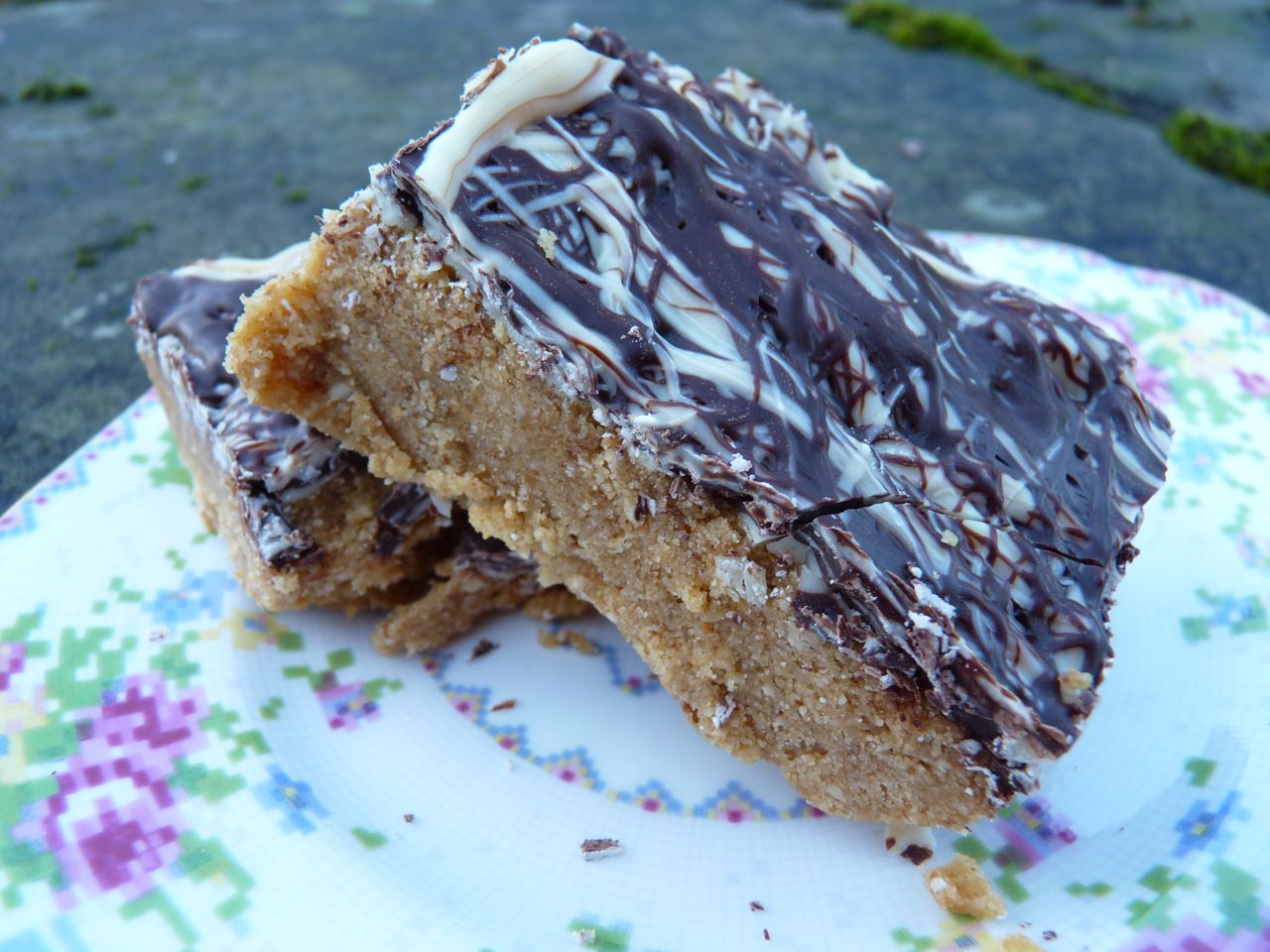
choc  nut slice

I wasn’t sure what I should call these. I was tempted by  calling it ‘cheesecake without the cheese’, but that would just be cake.  This is my youngest’s go-to recipe when she wants to make something. She was sick on Sunday night, so couldn’t go to school yesterday, despite being as bright as a button. So, yesterday was a day of keeping her amused. Her first request was to make these. They are an adaptation of a recipe by Lorraine Pascale from her Fast, Fresh and Easy Food. My youngest had this book for Christmas from her grandparents last year and she was drawn to Lorraine’s Peanut Butter Squares from her first read and we have been making them regularly ever since. However, I have played about with them each time, reducing the sugar and the peanut butter, in an attempt to make them a bit healthier and a bit less sweet. I am not saying they are healthy, but they are good and they get the thumbs up from the youngest and her dad.

250g digestive biscuits
100g soft brown sugar
50g peanut butter
100g nuts, (you can use whatever you have in your cupboard, I had hazelnuts this time)
150g butter
200g chocolate (we used 100g dark chocolate and 100g milk chocolate this time, but you can use whatever you have or like)

Method

We use a 20cm round  or square cake pan, lined with baking paper. You could also line it with clingfilm.

Melt the butter in a pan over a gentle heat.

Whizz the biscuits in a food processor until they are fine crumbs. Add the sugar and give another whizz until mixed. Add the peanut butter and nuts and whizz again. The nuts should be quite finely chopped, but a few chunks make for an interesting texture.  Pour in the melted butter and whizz until everything starts to come together.  Pour the mixture into the lined tin and press down well with the back of a spoon.

Melt the chocolate and pour and spread over the top. Because we used dark and white chocolate this time we dribbled spoonfuls of both chocolates over the top alternately to produce the marbled look.

Place the tin in the fridge to set and then cut into small squares. The ones in the photo are particularly generous slices. Half this size will suffice for each serving. It makes about 16 slices.


Chocolate nut slice Read More »

Chocolate chip cookies

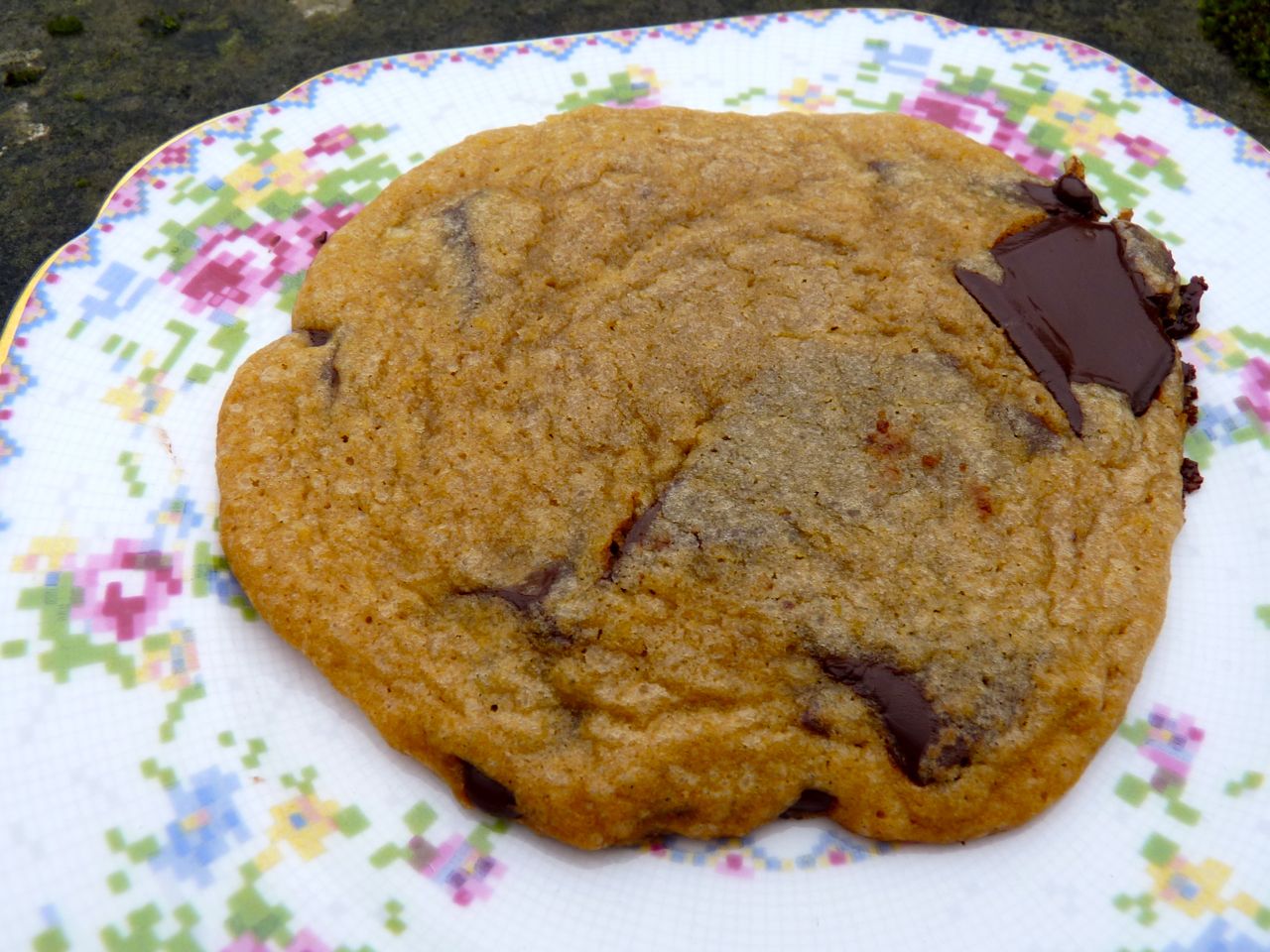
choc chip cookie


I had a request the other day for a chewy chocolate chip cookie recipe. I wondered why I have not put this on the blog before now. There are quite a few cookie recipes on here and yet this is the one we make most often. The girls (aged nine and six now) can pretty much manage this one all by themselves and the biscuits are prepared, cooked and ready to eat in less than 20 minutes. We are generous with the chocolate, no chocolate drops for us, we break up a 100g bar into fairly greedy chunks instead. Pretty much every mouthful is full on chocolatey. We use 70% dark chocolate because that’s what we like, but milk and white would be equally lovely.

The recipe is adapted from one in Hugh FW and Fizz Carr’s River Cottage Family Cookbook, which is a great book to use, whether you have children in the house or otherwise. I have reduced the sugar and the vanilla extract, making for a less sweet bite than Hugh and Fizz’s.

We make them on the large side, because why would you do anything other than that?

The recipe makes 12 large biscuits.

125g butter
75g granulated sugar
75g soft dark brown sugar
1 egg
1 tsp vanilla extract
150g plain flour
½ tsp baking powder
100g chocolate, drops or a bar broken into chunks (dark, milk or white, or a mix, depending on your preference)

Method

Preheat the oven to 190°c, gas mark 5 or use the top shelf of the Aga’s baking oven.

Melt the butter in a pan over a gentle heat. Place the sugars in a bowl and stir to mix. Pour over the melted butter and stir, add the egg and vanilla extract and mix well. Add the flour and baking powder and mix to a soft dough. Stir in the chocolate chunks.

Place spoonfuls of the mixture on a baking tray, that is covered with a silicone sheet or baking paper or is well greased with a dot of butter. Bake in a preheated oven for 8-10 minutes until just turning brown. Leave on the tin to harden for a couple of minutes and then either eat or place on a wire rack to cool completely.


Chocolate chip cookies Read More »